-
Shop
- Adidas
- Advanced Technologies
- AI Career Advantage Collection
- AI Skills for Creators & Freelancers
- AI Client Management
- AI Ethics
- AI Mindset
- AI Tools & Prompts
- AI Writing & Content Creation
- Audio, Voice & Music
- Design & Visual Creation
- Email, Messaging & Communication
- Freelancing & Business
- Marketing, Ads & Conversion
- Productivity, Workflow & Automation
- SEO & Search Optimization
- Social Media Content & Growth
- Strategy, Planning & Analytics
- Video Creation & Editing
- AI Skills Mastery 2026 Collection
- Bathroom
- Best-Sellers
- Car Accessories
- Confidence
- Dating & Social Skills
- Digital Resources
- AI & Technology
- AI Skills
- Beauty
- Budgeting & Saving
- Car Buying & Ownership
- Cozy Feast Collection
- Electronics & Technology
- Entrepreneurship & Business Growth
- Financial Education
- Financial Independence
- Financial Mindset & Psychology
- Goal Setting
- Hobbies
- Home Styling & Organization
- Kitchen & Recipes
- Leadership
- Mindfulness
- Mindset
- Online Business
- Parenting & Child Development
- Personal Style & Fashion
- Pet Lifestyle & Wellness
- Positive Thinking
- Sleep Improvement
- Smart Life with AI
- Stress Management & Relaxation
- Travel Planning
- Wellness
- Yoga & Fitness
- Yoga & Mind-Body Practices
- Education & Learning
- Family & Parenting
- Fashion
- Furniture
- Gadgets
- Health & Beauty
- Health & Wellness
- Home & Garden
- Home Decor
- Home Electronics
- Kids & Babies
- Kitchen
- Kitchen Best-Sellers
- Lighting
- Luxury Brands Collection
- Nike
- Patio, Lawn & Garden
- Personal Growth
- Pet Care
- Pet Supplies
- Pets
- Smart Amazon Shopping
- Sport & Outdoors
- Stress Relief & Relaxation
- Travel
- Travel & Adventure
- Wealth
- Popular
- Best deals
Self-Improvement Plan: Weekly Actions That Actually Stick
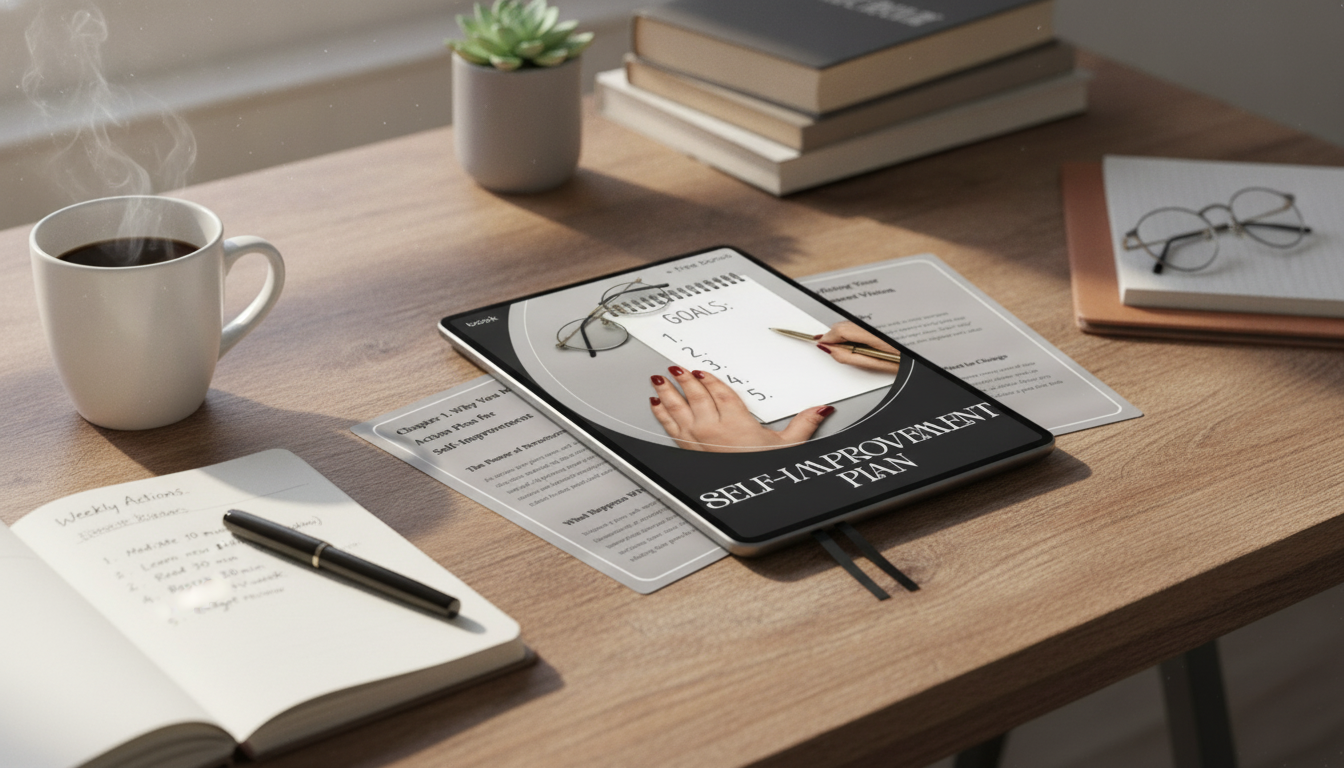
Build a Clear Self-Improvement Plan That Actually Sticks
A self-improvement plan works best when it turns good intentions into a simple sequence of decisions: what matters, what to do next, and how to measure progress. The goal isn’t to create a perfect routine—it’s to create a repeatable system you can run every week, even when life gets busy. Below is a practical, step-by-step approach to setting meaningful goals, translating them into small weekly actions, and tracking progress without overcomplicating anything.
What a Self-Improvement Plan Really Is (and Why Most Plans Fail)
A self-improvement plan is a written system that connects values → goals → actions → reviews. It’s less about motivation and more about having a simple path to follow when motivation drops.
Most plans fail for predictable reasons:
- Goals are vague (no clear “done” definition).
- Too many goals are started at once.
- No deadlines, so actions stay “someday.”
- No tracking, so progress feels invisible.
- No weekly reset, so one off week turns into quitting.
Instead of relying on willpower, focus on behavior and environment. Research and clinical guidance consistently highlight that behavior change improves when actions are small and cues are clear (see behavior change resources from the American Psychological Association and habit-building tips from the NIH National Institute on Aging).
To reduce overload, pick just 1–3 priority areas (health, career, relationships, finances, mindset, skills). Fewer priorities makes it easier to follow through long enough to build momentum.
Step 1: Choose One Focus Area and Write a Specific Outcome
Start with one focus area first. Not because the other areas don’t matter, but because consistency is a skill—and it’s easier to build the skill with a smaller target.
Write an outcome that is specific and time-bound: what you’ll do, by when, and why it matters to you. Then define what “done” looks like in observable terms, so you can’t accidentally keep moving the finish line.
Outcome to Clarity Checklist
| Prompt | Example |
|---|---|
| Focus area | Health |
| Outcome (what + by when) | Walk 30 minutes, 4 days/week for the next 6 weeks |
| Why it matters | More energy and better mood |
| Proof of completion | 24 walks logged on a tracker |
| Main barrier | Evening fatigue |
| Support idea | Set clothes/shoes by the door at lunch |
Step 2: Turn the Goal into an Action Plan (Small Steps That Actually Happen)
Outcomes don’t happen because they’re inspiring; they happen because the next step is obvious. Convert your outcome into milestones (weekly targets) and then into “next actions” that fit into real life—usually 15–30 minutes.
- Milestones: weekly targets that show you’re on track (example: 4 walks/week).
- Next actions: small tasks that make the milestone easier (example: pick a route, set a calendar block, charge headphones).
Add a “minimum version” for low-energy days. This is a fallback plan that keeps the identity and streak alive (example: “If I can’t do 30 minutes, I do 10 minutes.”). The point is to protect consistency.
Then add triggers: when and where the action happens. Put it on your calendar with a time and a location. If you want deeper performance insights on how goals and systems interact, practical summaries and research themes are available via Harvard Business Review’s goal-setting topic hub.
Step 3: Build a Simple Tracking System (So Progress Is Visible)
Tracking Options at a Glance
| Method | Best for | How to use it weekly |
|---|---|---|
| Checkbox habit tracker | Consistency habits | Count completions; adjust schedule if completion rate is under 70% |
| Weekly action list | Project-style goals | Move unfinished tasks; cut or simplify anything repeated twice |
| Scorecard (1–10) | Mindset/energy goals | Note patterns; add one change that improves the lowest-scoring day |
| Reflection prompts | Identity and behavior change | Write 3 bullets: win, challenge, next step |
Using a Printable Goal-Setting eBook to Stay Consistent
For a guided, step-by-step framework, consider Your Self-Improvement Plan | Printable Goal-Setting eBook. It’s especially helpful when you know what you want to change, but consistency is the missing piece.
A Practical Weekly Reset Routine (15 Minutes)
To make the “prepare the environment” step easier, set up a small planning station. A simple surface you enjoy using can make planning feel frictionless—like a clean tray for your notebook, pen, and timer. The Luxury 12-Inch Stainless Steel Decorative Tray for Home, Kitchen & Countertop works well for keeping planning tools together so they don’t scatter around the house.
If time awareness helps you stay consistent, a reliable daily accessory can support the habit of showing up on schedule. The Luxury Men’s Automatic Mechanical Watch is a practical option for people who prefer a tangible reminder instead of another phone notification.
Recommended Digital Resource
Your Self-Improvement Plan provides a printable framework for setting goals and translating them into an action plan with built-in tracking and review support. It’s a strong fit for learners who like guided prompts, checklists, and a repeatable weekly structure—especially when motivation is high but follow-through is inconsistent.
FAQ
How do you create an action plan for self-improvement?
Pick one focus area, write a clear outcome with a deadline, then break it into weekly milestones and 15–30 minute next actions. Schedule those actions, track them daily, and do a short weekly review to adjust what isn’t working.
How many goals should be in a self-improvement plan?
One to three goals at a time is the sweet spot for most people. Fewer goals reduces cognitive load and makes it easier to build consistent routines before adding anything new.
What if motivation drops after the first week?
Use a minimum-viable version of the habit for low-energy days, rely on if/then plans for predictable obstacles, and set up your environment so the next action is obvious. A weekly reset helps you restart quickly without scrapping the entire plan.
Recommended for you


Brass Dual-Handle Deck-Mount Sink Faucet Guide
Jun 23, 2026













Leave a comment