
A personal improvement plan is easiest to follow when it’s specific, small enough to do on busy days, and reviewed regularly. Start by choosing one area to improve (health, relationships, career, finances, mindset), then turn it into a clear outcome and a simple weekly rhythm that builds momentum.
Write a single sentence that describes what success looks like and how you’ll notice it. Example: “Improve my energy by sleeping 7+ hours on weeknights and walking 20 minutes after lunch.” If it’s vague, it’s hard to track and easy to ignore.
Limit the plan to a few goals so it doesn’t become overwhelming. Add a number and a timeframe (weekly or monthly), such as “strength train 2x/week” or “read 15 pages/day, 5 days/week.”
Schedule the smallest actions that still move the needle. Attach them to existing routines (after coffee, after work, before dinner) and decide the “minimum version” you’ll do even on low-energy days (5-minute walk, 1 paragraph journal, 10 pushups).
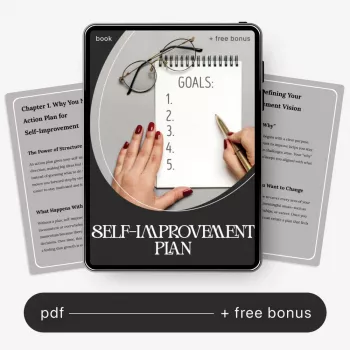
For a ready-to-use framework that focuses on weekly actions and follow-through, see this self-improvement plan guide.
Use a checklist, calendar X’s, or a notes app. Track the action (what you did), not just the outcome (what you want). Consistency is easier to control than results.
Set a 10-minute weekly review: what worked, what didn’t, what to change. If you keep missing an action, shrink it, move it, or remove friction (prep clothes, set reminders, reduce steps).
Include one priority area, 1–3 measurable goals, the weekly actions you’ll take, a tracking method, and a weekly review time. Keep it short enough that you can read it in under a minute.






Leave a comment