Decode the Strategy Behind a Global Luxury Powerhouse
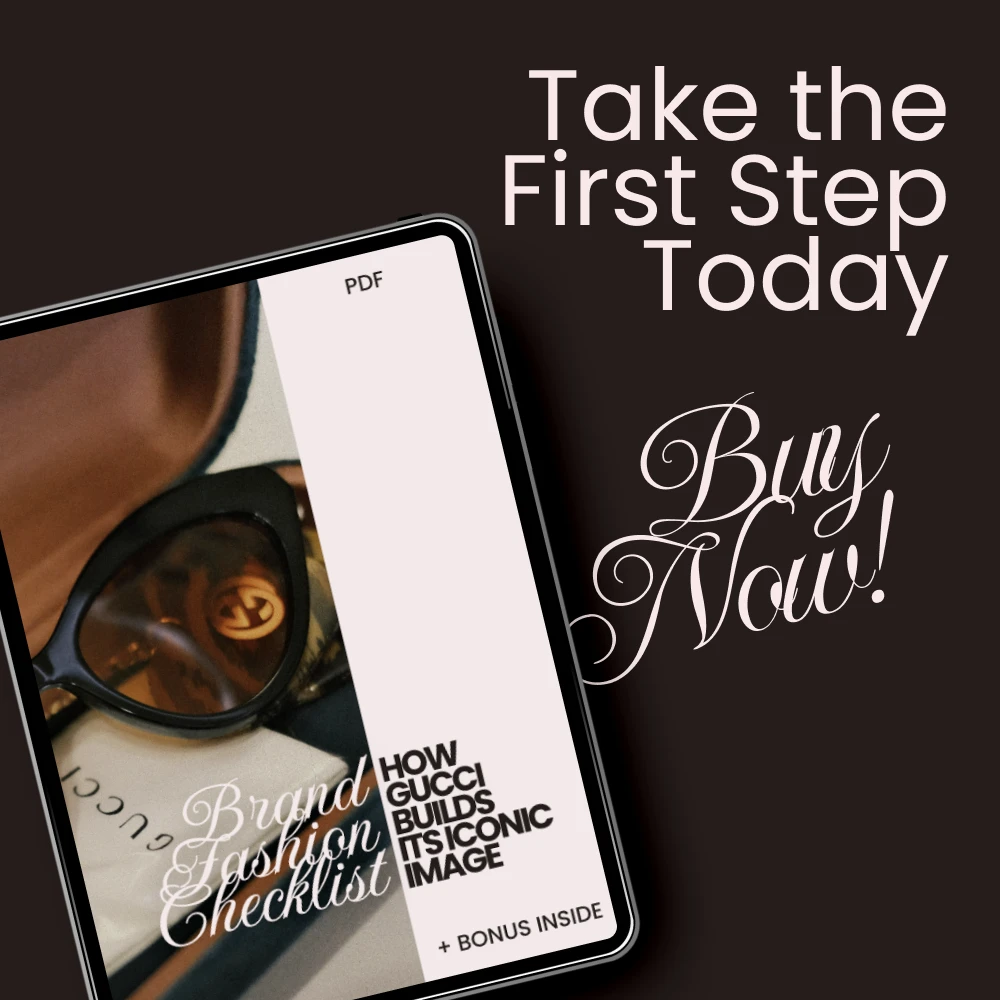
If you’ve ever wondered how Gucci maintains its cultural dominance decade after decade, this in-depth Brand Fashion Checklist: How Gucci Builds Its Iconic Image breaks it down step by step. Gucci isn’t just designing clothes — it’s engineering desire, identity, and aspiration. This professionally designed digital checklist gives you a strategic lens into how gucci builds its image and protects its luxury positioning in an ever-changing market.
Whether you’re a fashion buyer seeking inspiration or a brand builder looking for competitive insight, this checklist transforms Gucci’s branding brilliance into practical, actionable lessons you can apply immediately.
What’s Inside the Checklist
- Heritage & Storytelling Analysis — Understand how Gucci leverages its 1921 Florence roots, iconic symbols like the GG monogram and horsebit, and narrative-driven collections.
- Creative Direction Breakdown — Explore how bold artistic leadership and runway-as-theater experiences fuel conversation and recognition.
- Celebrity & Cultural Strategy — Learn how high-profile ambassadors and pop culture integration amplify visibility.
- Controlled Exclusivity Framework — Discover how premium pricing, limited distribution, and boutique environments protect prestige.
- Visual Consistency Guide — See how Gucci maintains a recognizable aesthetic across campaigns, packaging, and digital platforms.
- Innovation Without Identity Loss — Examine collaborations, digital fashion experimentation, and sustainability positioning.
- Buyer Insight Notes — Strategic takeaways after every section so you can apply the lessons immediately.
Who Is This For?
- Fashion buyers seeking deeper brand evaluation skills
- Fashion business owners and startup founders
- Marketing and branding students
- Luxury enthusiasts curious about how gucci builds its image
- Content creators analyzing high-end fashion strategy
Why This Checklist Is Different
Unlike generic branding guides, this resource focuses on one of the most culturally influential luxury houses in the world and translates its strategy into a clear, structured evaluation tool. It’s not theory-heavy or abstract. It’s practical, concise, and designed for real-world application.
You’re not just reading about branding — you’re reverse-engineering it.
- Clear positioning framework
- Emotional storytelling breakdown
- Cultural relevance mapping
- Visual discipline checklist
- Strategic exclusivity insights
Practical Benefits
- Strengthen your ability to evaluate luxury brands
- Improve your own fashion brand positioning
- Gain clarity on high-end pricing strategy
- Understand cultural relevance in modern fashion
- Learn how image is engineered — not improvised
Gucci’s success is not accidental. It’s built through intention, discipline, and bold creative direction. Now you can study the exact framework behind it.
Download the Brand Fashion Checklist: How Gucci Builds Its Iconic Image today and start analyzing luxury branding like an insider.
Order cancellation
All orders can be cancelled until they are shipped. If your order has been paid and you need to make a change or cancel an order, you must contact us within 12 hours. Once the packaging and shipping process has started, it can no longer be cancelled.
Refunds
Your satisfaction is our #1 priority. Therefore, you can request a refund or reshipment for ordered products if:
- If you did not receive the product within the guaranteed time( 45 days not including 2-5 day processing) you can request a refund or a reshipment.
- If you received the wrong item you can request a refund or a reshipment.
- If you do not want the product you’ve received you may request a refund but you must return the item at your expense and the item must be unused.
We do not issue the refund if:
- Your order did not arrive due to factors within your control (i.e. providing the wrong shipping address)
- Your order did not arrive due to exceptional circumstances outside the control of Fancin (i.e. not cleared by customs, delayed by a natural disaster).
- Other exceptional circumstances outside the control of https://fancin.com
*You can submit refund requests within 15 days after the guaranteed period for delivery (45 days) has expired. You can do it by sending a message on Contact Us page
If you are approved for a refund, then your refund will be processed, and a credit will automatically be applied to your credit card or original method of payment, within 14 days.
Exchanges
If for any reason you would like to exchange your product, perhaps for a different size in clothing. You must contact us first and we will guide you through the steps.
Please do not send your purchase back to us unless we authorise you to do so.
Your files will be available to download once payment is confirmed.



Every buyer insight at the end of each section lands. No wasted words anywhere in this.
The breakdown of different creative directors' aesthetics under one brand umbrella was fascinating — it shows how direction can evolve without losing identity.
I manage talent partnerships for a mid-tier fashion label and the celebrity alignment section completely shifted my pitch strategy. Before this, I treated ambassador deals as vanity plays — get the name, post the photo, move on. The checklist reframed it as pop culture embedding, which is fundamentally different. I restructured three pending proposals around cultural integration rather than just visibility. Two of them closed within a month. I also started applying the controlled exclusivity logic to which events we attend, and our brand perception scores in our last survey ticked up noticeably. The strongest branding resource I've read this year, and I've read a lot of them.
Good content but a few points felt repetitive between the storytelling and visual consistency sections. Tightening that overlap would strengthen it. The exclusivity analysis is excellent though.
The idea that campaigns should feel editorial rather than commercial just unlocked something for me.
I teach fashion merchandising and the six-pillar framework maps perfectly to how I explain brand architecture to students.
👌🔥👍⭐⭐
The emotional resonance point under narrative-driven collections is so underrated. Most branding guides skip right past it. This checklist puts it front and center where it belongs, and the buyer insight about memorable stories being the foundation of brand image tied it all together.
Covered the key pillars clearly. The collaboration strategy section could use a concrete example or two — naming specific Gucci partnerships would ground the point. Heritage and exclusivity sections are tight though.
This gave me vocabulary for things I'd been doing instinctively.
Framing accessibility management as essential to desirability is brilliant and counterintuitive.
I used the checklist to evaluate a wholesale brand I was considering stocking. Went through each of the six sections and scored them. They failed on heritage, visual consistency, and exclusivity, so I passed. A month later that label got dropped from two other retailers. This framework saved me a bad buy.
Wish this existed when I launched my first collection three years ago. I made every mistake this checklist warns against — no storytelling, inconsistent visuals across platforms, zero exclusivity strategy. When I relaunched last spring using clear positioning and a unified visual language, the response was completely different. Same quality product, entirely different perception. That distinction is the core lesson here and it's delivered perfectly.
The strong digital identity point is something every DTC brand needs to hear right now.
The buyer insight about brands living where their audience lives pushed me to finally invest in TikTok for my label. Read it, applied it, saw results.
The heritage section is strong but I wanted more on how newer brands without a century of history can manufacture that sense of legacy. The checklist assumes you already have a story — what if you're building one from scratch? The remaining five sections still apply well though.
Every section earns its place — no padding anywhere.
Connecting premium pricing strategy to brand perception rather than just profit margins shows a real understanding of luxury positioning. The controlled exclusivity section overall was the strongest part for me.
I'm a buyer for a department store group and before this I evaluated new labels almost entirely on product quality and margin. This checklist introduced a brand architecture lens I wasn't using. I scored five emerging labels against all six sections — heritage, creative direction, celebrity alignment, exclusivity, visual consistency, and innovation — and two of them immediately fell out of consideration. The three I kept have all outperformed our projections this quarter. I now run every potential buy through this framework before signing.
The packaging-to-Instagram consistency point is deceptively simple but so few brands execute it 💯
The collaboration section could use specific Gucci partnership examples to land the point harder. Framework overall is solid and the strategic exclusivity analysis is where this really shines.
This reframed branding from abstract to tactical for me — printing it out for my studio wall.
🙌❤️✨👏🔥
Clear, well-paced, and the buyer insights ground every section in practical takeaways.
The sustainability messaging point is timely — knowing that modern luxury buyers expect responsibility gave me a template for positioning my eco line without sounding preachy. The way it frames Gucci addressing this in both communications and production made it actionable rather than aspirational.