Unlock the Power of AI to Measure Burberry’s Brand Perception
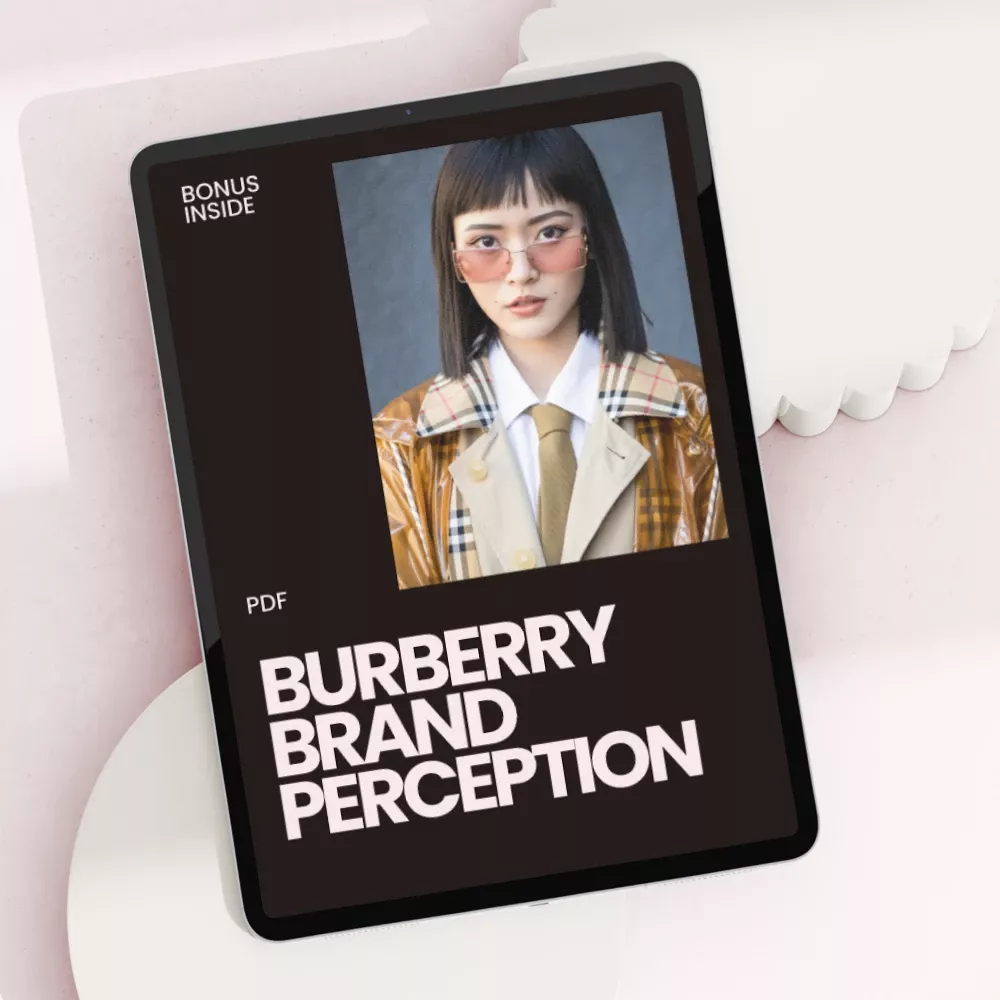
Take your brand analysis to the next level with the Burberry Brand Perception Checklist. This practical guide helps you leverage AI to assess Burberry’s position in the luxury fashion market. Whether you’re evaluating public sentiment, identifying trends, or gauging how the world views the iconic trench coat, this digital download is your go-to resource for understanding and improving Burberry’s brand image.
Designed for fashion marketers, strategists, and brand managers, this checklist provides a clear, structured approach to AI-powered brand analysis. You’ll learn how to refine your AI search process to capture the essence of Burberry’s perception across social media platforms, fashion blogs, and more.
Product Features:
- Define Your Goal: Establish your objective, whether it’s measuring public sentiment or identifying luxury positioning.
- Pick the Right AI Tool: Select the best platform for analyzing text, images, and social media mentions.
- Identify Keywords & Phrases: Optimize AI searches with targeted keywords like “Burberry,” “luxury fashion,” “trench coat,” and “elegant.”
- Map Platforms & Sources: Target Instagram, TikTok, YouTube, and niche forums for diverse insights.
- Set Time Frames: Track sentiment fluctuations around campaigns, product drops, and runway shows.
- Analyze Visual Mentions: Use AI image recognition to detect Burberry logos and patterns across the web.
- Track Sentiment & Emotion: Understand how people feel about Burberry, whether positive, negative, or neutral.
- Spot Emerging Trends: Recognize the latest buzz and growing discussions about Burberry.
- Summarize & Visualize: Transform your findings into easy-to-understand charts and heatmaps.
- Recommend Actionable Moves: Get actionable insights to refine campaigns and product launches.
- Repeat & Refine: Continuously improve your analysis for ongoing success.
Why Choose This Checklist?
This Burberry Brand Perception Checklist is more than just a traditional guide—it’s a comprehensive framework that helps you gain actionable insights into Burberry’s brand presence and perception. What makes this resource stand out? Unlike other tools that only provide vague advice, this checklist combines the power of AI with practical steps to dive deep into sentiment analysis, trend spotting, and image recognition. It’s tailored specifically for those who want to understand Burberry’s unique position in the world of luxury fashion.
Who Is This For?
If you’re a marketing professional, brand strategist, or fashion enthusiast looking to decode Burberry’s brand perception, this checklist is for you. Whether you’re tracking how Burberry’s luxury brand is received across social media or discovering which emotions dominate conversations about their trench coat, this guide provides clear, practical steps for success.
Start Your Brand Perception Journey Today
Don’t miss out on the opportunity to unlock valuable insights about Burberry’s brand perception. Download the Burberry Brand Perception Checklist today and start using AI-powered analysis to refine your strategy and make data-driven decisions. Whether you’re analyzing sentiment, spotting emerging trends, or refining your luxury fashion campaigns, this checklist will guide your every step.
Ready to get started? Download now and stay ahead of the curve in understanding Burberry’s luxury positioning.
Order cancellation
All orders can be cancelled until they are shipped. If your order has been paid and you need to make a change or cancel an order, you must contact us within 12 hours. Once the packaging and shipping process has started, it can no longer be cancelled.
Refunds
Your satisfaction is our #1 priority. Therefore, you can request a refund or reshipment for ordered products if:
- If you did not receive the product within the guaranteed time( 45 days not including 2-5 day processing) you can request a refund or a reshipment.
- If you received the wrong item you can request a refund or a reshipment.
- If you do not want the product you’ve received you may request a refund but you must return the item at your expense and the item must be unused.
We do not issue the refund if:
- Your order did not arrive due to factors within your control (i.e. providing the wrong shipping address)
- Your order did not arrive due to exceptional circumstances outside the control of Fancin (i.e. not cleared by customs, delayed by a natural disaster).
- Other exceptional circumstances outside the control of https://fancin.com
*You can submit refund requests within 15 days after the guaranteed period for delivery (45 days) has expired. You can do it by sending a message on Contact Us page
If you are approved for a refund, then your refund will be processed, and a credit will automatically be applied to your credit card or original method of payment, within 14 days.
Exchanges
If for any reason you would like to exchange your product, perhaps for a different size in clothing. You must contact us first and we will guide you through the steps.
Please do not send your purchase back to us unless we authorise you to do so.
Your files will be available to download once payment is confirmed.




I was skeptical because most brand perception content is fluffy marketing speak, but this is genuinely operational. Each step feeds into the next one logically. The recommendation to link every actionable suggestion directly back to the AI search results adds a layer of credibility that makes stakeholder buy-in so much easier.
Wish it covered competitive benchmarking more explicitly — comparing Burberry's perception against peers would make the insights richer.
Quick read that punches above its weight.
I teach a graduate course on digital brand strategy and I've started assigning this as a pre-class reading. The checklist format gives students a concrete process to follow instead of just theory. The emotional keyword step especially sparks good discussion — students initially resist tracking words like "overpriced" alongside "elegant" but they always see the value once they try it. Several students have adapted this framework for their capstone projects on brands outside fashion and it holds up well.
Not bad overall but feels surface-level if you already work with tools like Brandwatch or Talkwalker daily. The framework is sound, just not deep enough for advanced practitioners. The niche forum recommendation was the one piece that genuinely added to my approach.
The platform mapping step alone expanded our monitoring from three channels to nine.
Solid bones, could use more flesh. The steps are all right but some feel like headers waiting for deeper content underneath. Still, the structure gave me a better audit process than what I was cobbling together on my own.
Every brand strategist should have this saved somewhere accessible.
The distinction between authentic consumer sentiment and marketing spin — and the specific step to filter for it — is something I rarely see addressed this directly. Most guides lump everything together and call it "social listening." This one forces you to be more honest about what the data actually says.
Forwarded to my analytics team before I even finished reading it.
🔥👏📊
I used to run perception audits as a quarterly dump of charts nobody acted on. This guide reframed the whole thing as a continuous loop with built-in action steps. My last report included specific campaign recommendations tied to sentiment data, and for the first time the brand team actually implemented changes based on it. The credibility piece — linking recommendations directly to AI search results — was the unlock. Before that, my suggestions always felt like opinion. Now they feel like evidence. The only thing missing is guidance on how often to update keyword lists, but I've settled on monthly and it's working 😅
Gave me a vocabulary for things I was already doing but couldn't articulate to clients.
Practical enough that I built a Notion template around it the same afternoon.
Good checklist for someone just getting started with brand sentiment work. For experienced analysts it reads more like a refresher, though the emotional tagging approach and visual mention tracking were new angles even for me.
The step about tracking visual mentions through image recognition opened a door I didn't know existed — we found our client's logo appearing in contexts they had no idea about. Some positive, some concerning. That kind of visibility is worth the entire read.
Clear enough to hand to a junior analyst on day one.
Reasonable guide but I wanted more on handling contradictory sentiment across different platforms. What do you do when TikTok loves the brand and Twitter hates it? That nuance is where perception analysis gets hard, and it's glossed over here.
The heatmap and word cloud suggestion for presenting findings changed how I deliver reports — visual summaries land so much faster in meetings than spreadsheets do 📊
I appreciate that it doesn't pretend one round of analysis is enough — the repeat-and-refine emphasis is exactly how this work should operate in practice. Most guides treat perception as a fixed thing you measure once. This treats it like weather you keep watching.
Read it in fifteen minutes and immediately improved my process.
An okay starting framework. Doesn't break new ground if you're already deep in social listening, but the checklist format makes it easy to audit whether your current process has gaps. Found two in mine.