Discover the Strategy Behind an Iconic Luxury Legacy
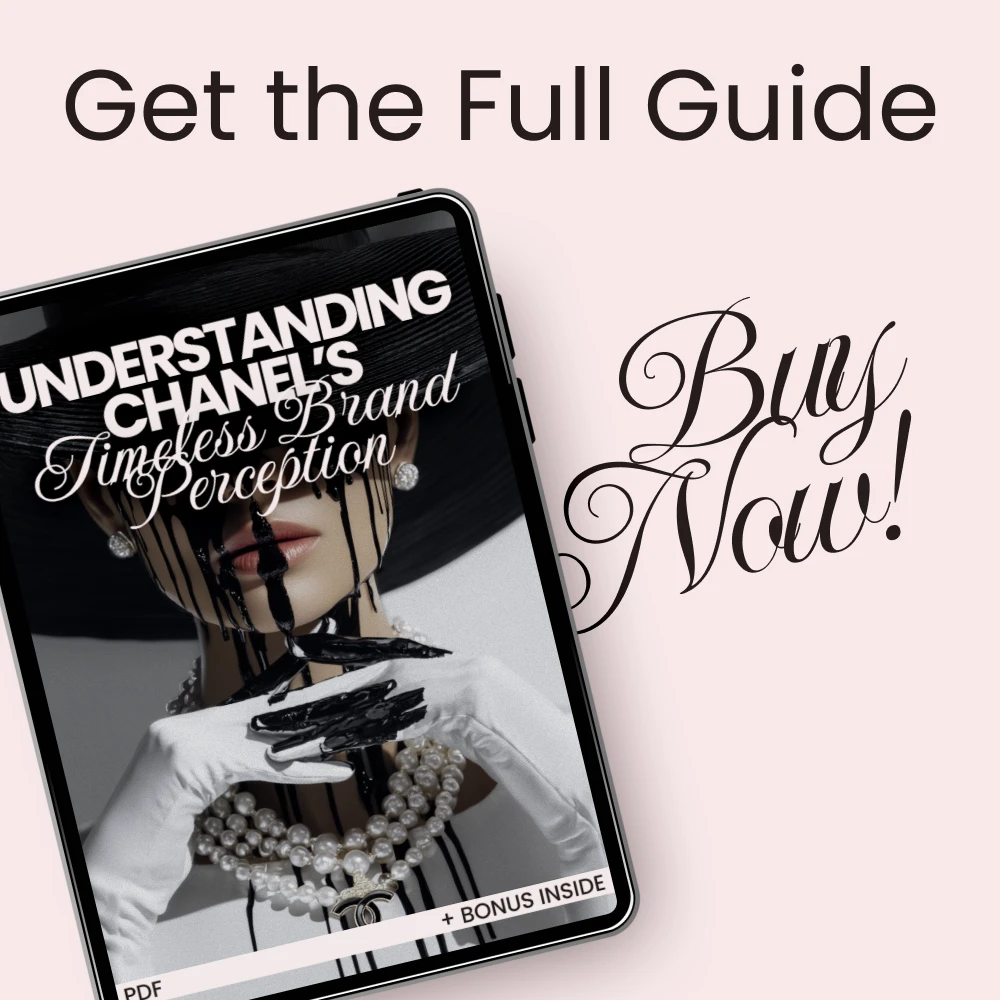
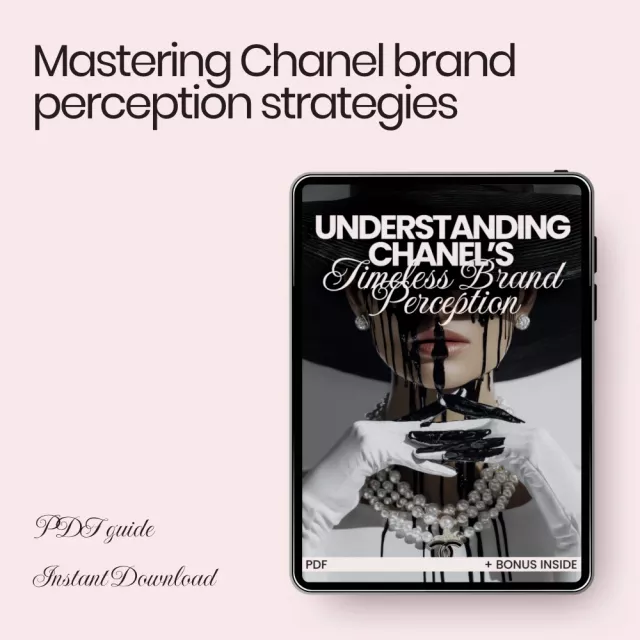
What makes Chanel more than just a fashion house? Why does the brand instantly evoke elegance, exclusivity, and timeless sophistication? Understanding Chanel’s Timeless Brand Perception is a comprehensive digital guide designed to unpack the psychology, strategy, and innovation behind one of the world’s most admired luxury brands. Whether you are a fashion entrepreneur, brand strategist, marketing student, or luxury enthusiast, this in-depth resource reveals how chanel brand perception has been carefully crafted, protected, and elevated across generations.
This professionally written guide goes beyond surface-level analysis. It explores how heritage, storytelling, visual identity, and modern AI tools all play a role in shaping chanel brand perception in today’s evolving digital landscape.
What’s Inside the Guide?
- Chapter 1: The Essence of Chanel – Coco Chanel’s original vision, signature brand elements, and how consumers perceive the house today.
- Chapter 2: Chanel’s Brand Identity in Action – Visual and verbal branding, luxury storytelling techniques, and a detailed case study on maintaining prestige.
- Chapter 3: Common Perception Pitfalls – Mistakes that dilute luxury, social media challenges, and how AI detects shifts in consumer sentiment.
- Chapter 4: Elevating Chanel’s Brand with AI – Predictive analytics, personalized marketing strategies, and how innovation supports heritage without compromising identity.
Who Is This For?
- Fashion brand owners and startup founders
- Luxury marketing professionals
- Business and branding students
- Content creators analyzing high-end fashion houses
- Anyone fascinated by chanel brand perception and luxury positioning
Why This Guide Is Different
Unlike generic branding eBooks, this guide blends classic luxury analysis with modern AI-driven insights. It bridges heritage and technology, showing not only how Chanel built its iconic image, but also how brands today can apply similar principles responsibly. The structured breakdown, real-world case study, and forward-looking AI strategies make it both practical and strategic.
Practical Benefits You’ll Gain
- A deeper understanding of how luxury perception is formed and sustained
- Clear frameworks you can apply to your own brand strategy
- Insight into avoiding common prestige-damaging mistakes
- Actionable ideas for integrating AI without losing brand authenticity
- A refined perspective on maintaining exclusivity in a digital world
Instant Digital Download
This is a downloadable guide, giving you immediate access upon purchase. Read it on your tablet, laptop, or print it for study and reference.
If you’re ready to explore the strategic depth behind chanel brand perception and learn how timeless luxury brands evolve without losing their essence, download Understanding Chanel’s Timeless Brand Perception today and elevate your branding knowledge to a new level.
Order cancellation
All orders can be cancelled until they are shipped. If your order has been paid and you need to make a change or cancel an order, you must contact us within 12 hours. Once the packaging and shipping process has started, it can no longer be cancelled.
Refunds
Your satisfaction is our #1 priority. Therefore, you can request a refund or reshipment for ordered products if:
- If you did not receive the product within the guaranteed time( 45 days not including 2-5 day processing) you can request a refund or a reshipment.
- If you received the wrong item you can request a refund or a reshipment.
- If you do not want the product you’ve received you may request a refund but you must return the item at your expense and the item must be unused.
We do not issue the refund if:
- Your order did not arrive due to factors within your control (i.e. providing the wrong shipping address)
- Your order did not arrive due to exceptional circumstances outside the control of Fancin (i.e. not cleared by customs, delayed by a natural disaster).
- Other exceptional circumstances outside the control of https://fancin.com
*You can submit refund requests within 15 days after the guaranteed period for delivery (45 days) has expired. You can do it by sending a message on Contact Us page
If you are approved for a refund, then your refund will be processed, and a credit will automatically be applied to your credit card or original method of payment, within 14 days.
Exchanges
If for any reason you would like to exchange your product, perhaps for a different size in clothing. You must contact us first and we will guide you through the steps.
Please do not send your purchase back to us unless we authorise you to do so.
Your files will be available to download once payment is confirmed.



Luxury must be comfortable — Coco's founding principle remains the sharpest evaluation standard in fashion.
Monochrome aesthetics, clean typography, and classic photography operating as a unified communication system — the visual branding section names the grammar that makes Chanel instantly recognizable before a word is read 🎯 The 'confident, aspirational, understated' voice description is exact: it explains why Chanel's communication never reads as promotional even when it's directly selling.
The interlocking CC logo functioning as a cultural icon rather than just a brand mark — that distinction runs through every section.
The Métiers d'Art case study is the guide's analytical centerpiece, and its significance extends well beyond what it first appears to be. Most luxury brands allocate the majority of their communication budget toward seasonal launches and product visibility, treating craftsmanship content as atmospheric filler rather than a primary perception driver. Chanel's annual event dedicated entirely to artisanal skill generates earned media and perception reinforcement that no direct product launch replicates. The insight drawn from this is precise: shaping perception at an emotional level is different from shaping it at an informational level, and only the former produces brand attachment that transcends any single collection. The storytelling framework identifying historical Coco references, behind-the-scenes craftsmanship, and aspirational lifestyle as the three pillars of campaign construction addresses three distinct dimensions of consumer connection simultaneously — which is why Chanel's communication consistency across decades feels coherent rather than repetitive.
Selective distribution restricting access to high-end boutiques and authorized sellers is described here not as a logistics decision but as a perception architecture decision. The controlled digital presence — artistry over discounting — completes that system by ensuring the online environment doesn't undercut what the physical environment builds. Both decisions reinforce each other in ways that are difficult for competitors to replicate precisely because they require consistent restraint rather than technical capability.
Perception dilution risks named with precision; the recovery path after brand damage has started is entirely absent.
Proactive AI-powered sentiment analysis scanning social media and reviews to flag potential perception issues before they escalate addresses one of the most difficult timing problems in luxury brand management: negative narratives around authenticity complaints or overexposure move faster than traditional monitoring cycles can track. The three-step brand protection sequence — AI tools into workflows, storytelling metrics alongside sales metrics, exclusivity maintained online and offline — keeps perception strategy coordinated across channels in a way that reactive monitoring doesn't.
Neglecting craftsmanship storytelling makes luxury feel superficial — the most precise line in the guide.
Younger luxury audiences prioritizing ethics, heritage, and authenticity alongside status is the demographic observation that changes how the social media section should be read ✨ Ignoring emerging platforms isn't just a distribution gap — it's a perception gap with the consumer generation that will define luxury's cultural meaning for the next two decades. The predictive alerts for campaign backlash specifically address how quickly that cohort organizes negative responses.
👜🖤🏛️💎🪡
The AI-driven personalization case study referencing 30% engagement increases without diluting brand prestige is the most compelling evidence point in the guide. Without a source, however, it reads as assertion rather than documented precedent — a distinction that matters in an analytical resource aimed at brand strategy practitioners. The subtlety argument, ensuring that personalization enhances exclusivity rather than producing mass-marketing associations, is the guide's most important practical contribution and deserves more supporting examples than a single unnamed case study.
Overexposure making a luxury brand feel 'common' — stated here with more analytical precision than most brand strategy resources manage.
Predictive analytics identifying rising consumer interest in eco-luxe fabrics before a collection is designed is where the AI forecasting section becomes operationally specific rather than conceptually abstract 🌱 The key distinction throughout is that AI identifies signals while human creatives decide what the brand's response to those signals sounds like — a boundary that determines whether AI integration enhances or dilutes the brand voice. The colors, materials, and styles forecasting framework has direct implications for runway sequencing: pieces that simultaneously address AI-identified trend emergence and the brand's heritage positioning consistently outperform either criterion optimized independently. The eco-luxe example is the guide's clearest argument that maintaining exclusivity while aligning with sustainability trends is possible precisely because AI finds the intersection before broader market movement makes it obvious.
AI to detect, not dictate — human creatives preserving authentic voice is the correct relationship 🤍
AI identifying high-value clients and curating invitations to exclusive events, collection previews, and personalized styling tips is where hyper-personalization most closely replicates the white-glove relationship that defined luxury service before digital scale. The guide's emphasis on subtlety as the operative condition — personalization that feels mass-produced undermines exclusivity even when technically sophisticated — draws a clear line between personalization that reinforces the premium experience and personalization that merely demonstrates algorithmic capability.
Brand touchpoint audit as the first AI integration step is correct; sequencing guidance for implementation across a large organization isn't there.
Storytelling metrics alongside sales metrics as the dual performance standard — underused in practice and clearly argued here.
I want to document what changed in how I approach luxury brand analysis after working through this guide, because the shift was specific enough to trace. My previous framework was primarily quantitative — share of voice, sentiment polarity ratios, engagement rates — with storytelling quality assessed separately and less rigorously. The core argument here, that perception is built through symbolism and narrative as much as through product quality, reoriented how I weight those inputs relative to each other. The Métiers d'Art case study made the analytical case directly: an annual event dedicated entirely to artisanal process storytelling — not product launches — generates sustained perception reinforcement that product-focused communication doesn't replicate. That argued for tracking craftsmanship storytelling volume and quality as a leading indicator of perception health, not as secondary content. The dilution risk framework was where my client work changed most materially. Before reading this, overexposure was something I measured retroactively through sentiment data. The guide positions it as detectable in advance through campaign and collaboration audit — too many partnerships at lower price points, inconsistent tone against the established aesthetic register — before sentiment data reflects the damage. Integrating that audit layer into quarterly brand reviews on a current project identified two collaboration approvals that would have introduced tonal inconsistency without the framework to flag them. The AI monitoring tools — particularly visual recognition for unauthorized design circulation and predictive alerts for campaign backlash before escalation — addressed the real-time layer of the same problem. The practical example in the final section, AI identifying trending handbag silhouette interest and the marketing team responding with a craftsmanship campaign rather than product photography, described exactly the sequencing that separates AI-assisted brand strategy from AI-substituted brand strategy. The 'detect, not dictate' principle is organizationally actionable in a way that broader AI strategy advice rarely is.
Content optimization AI suggesting which campaigns or visuals are most likely to reinforce luxury messaging, applied alongside visual recognition for counterfeit detection, creates a dual-function monitoring architecture. Defensive protection prevents perception erosion through unauthorized associations; offensive optimization identifies communication choices most likely to build positive perception before campaigns are committed to. Both functions operating continuously changes brand monitoring from a periodic audit to an ongoing feedback system.
🎭🖋️👁️✨🤍🌟
The brand identity and storytelling sections are genuinely strong — the Métiers d'Art case study and three-pillar campaign framework in particular. Where the guide struggles is in the social media section's treatment of emerging platforms: younger luxury audiences are identified as a priority demographic, and AI monitoring tools are described, but how those tools translate into platform-specific strategy remains abstract. For a resource covering consumer expectations in detail, the gap between identifying the younger audience's values and offering concrete guidance for reaching them within Chanel's controlled digital presence model is wider than it should be.
Inconsistent messaging as a dilution risk is more dangerous than overexposure and gets less attention in most strategy resources — this guide balances that.
Historical references to Coco's life, behind-the-scenes craftsmanship content, and aspirational lifestyle imagery working together across the same campaign — the guide identifies this three-pillar structure as what distinguishes Chanel's storytelling from brands that deploy only one or two of those elements. Aspiration is the most widely used of the three; heritage and craftsmanship are what make the aspiration feel earned rather than projected, and that distinction is where the perception gap between Chanel and its competitors is widest.
AI sentiment tracking distinguishing how younger and older generations perceive luxury differently — making that segmentation continuous rather than periodic is where monitoring becomes strategy.
The guide's central argument — AI as a tool that detects and optimizes, with human creatives retaining decision authority — comes closest here to resolving a tension most luxury brand resources treat as unresolvable. If AI dictates creative direction, the brand voice becomes optimized rather than authentic, which is the wrong register for a house whose prestige depends on the perception that each decision reflects considered aesthetic judgment. AI monitoring brand perception continuously — flagging negative sentiment spikes, identifying which campaigns reinforce luxury messaging, detecting counterfeit circulation — adds analytical capability without displacing the judgment layer. The brand touchpoint audit positions integration as a practical first step rather than a wholesale transformation, compatible with protecting existing perception equity while building monitoring sophistication incrementally ✨ The broader principle — tracking what consumers feel about the brand rather than only what they buy — extends the analytical framework into performance measurement in a way that few luxury brand resources address with this specificity.