Unlock the Secrets Behind Dior’s Enduring Trustworthiness
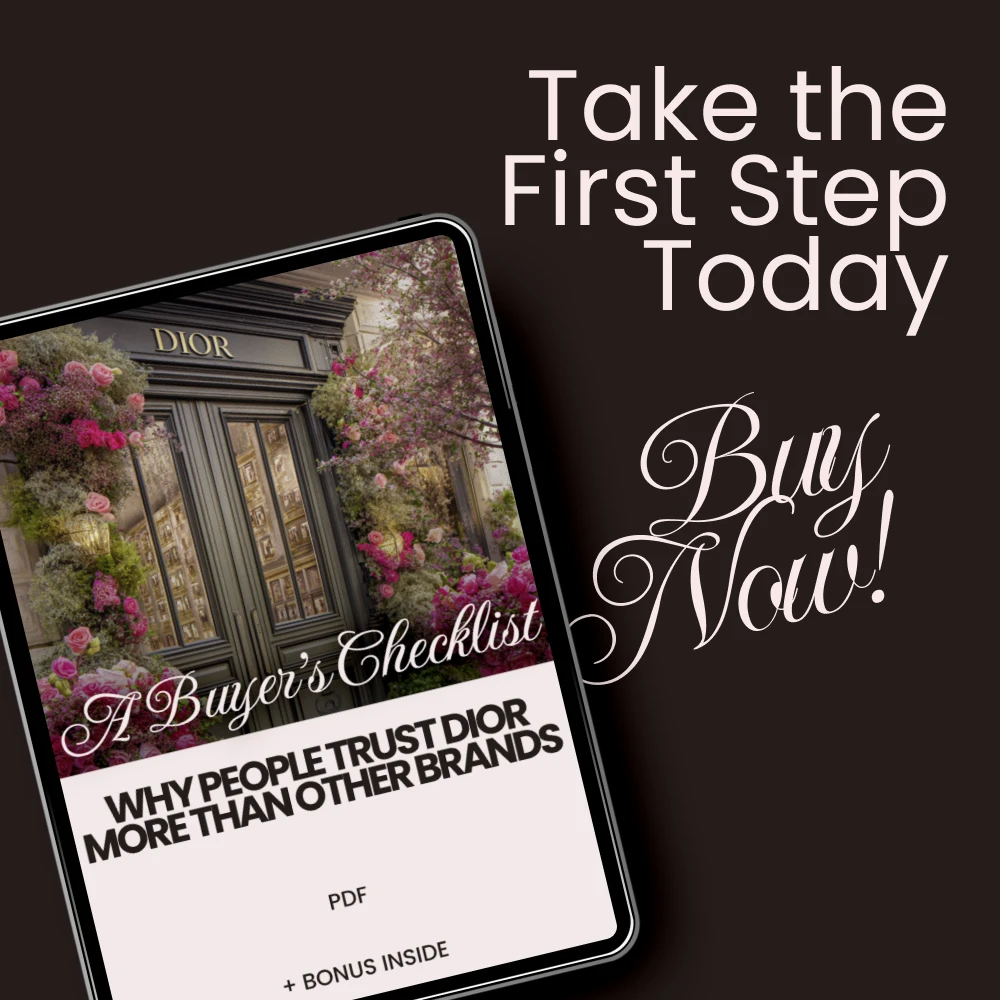
Ever wondered why Dior is a brand that commands trust and admiration worldwide? Whether you’re a fashion buyer, a luxury enthusiast, or simply someone who appreciates impeccable style, understanding the reasons behind Dior’s reputation is essential. Our Why People Trust Dior More Than Other Brands checklist provides a deep dive into the key factors that make Dior stand out in the fashion world. From its timeless heritage to its innovation with tradition, this guide helps you make informed choices when buying luxury goods.
This digital download is perfect for anyone who wants to gain a deeper understanding of what makes Dior such a reliable and respected brand. You’ll get a concise checklist that outlines the key elements that inspire trust in Dior, along with practical tips to apply to your own fashion buying decisions. Whether you’re new to the world of luxury fashion or an experienced collector, this guide will serve as your ultimate reference.
What’s Inside the Checklist?
- Heritage & Legacy: Discover how Dior’s rich history dating back to 1946 continues to build its credibility.
- Quality Craftsmanship: Learn how Dior’s attention to detail and use of premium materials set it apart.
- Celebrity & Influencer Endorsements: See how Dior’s partnerships with high-profile figures boost its appeal.
- Innovation with Tradition: Understand how Dior evolves with the times without losing its timeless elegance.
- Transparent Brand Story: Learn why Dior’s open communication about its values builds consumer trust.
- Customer Experience: Find out how Dior’s focus on exceptional customer service strengthens its reputation.
Why Choose This Guide?
Our Why People Trust Dior More Than Other Brands checklist is not just another fashion guide—it’s a comprehensive resource designed to help you build trust in your fashion choices. It’s carefully curated to highlight the most important elements that contribute to Dior’s reputation for excellence. This guide is for anyone looking to make smarter fashion purchases and invest in trusted, high-quality brands.
What sets this checklist apart from others is its focus on the practical aspects of Dior’s trustworthiness. It goes beyond theory to provide you with actionable insights you can use when shopping for luxury fashion items. This is more than just a general overview; it’s a tool for savvy buyers who want to make confident and informed decisions every time they invest in high-end fashion.
Take Action Now!
Don’t miss out on this opportunity to elevate your fashion knowledge. Download the Why People Trust Dior More Than Other Brands checklist now and start making smarter, more informed choices today! Trust in Dior and trust in yourself.
Order cancellation
All orders can be cancelled until they are shipped. If your order has been paid and you need to make a change or cancel an order, you must contact us within 12 hours. Once the packaging and shipping process has started, it can no longer be cancelled.
Refunds
Your satisfaction is our #1 priority. Therefore, you can request a refund or reshipment for ordered products if:
- If you did not receive the product within the guaranteed time( 45 days not including 2-5 day processing) you can request a refund or a reshipment.
- If you received the wrong item you can request a refund or a reshipment.
- If you do not want the product you’ve received you may request a refund but you must return the item at your expense and the item must be unused.
We do not issue the refund if:
- Your order did not arrive due to factors within your control (i.e. providing the wrong shipping address)
- Your order did not arrive due to exceptional circumstances outside the control of Fancin (i.e. not cleared by customs, delayed by a natural disaster).
- Other exceptional circumstances outside the control of https://fancin.com
*You can submit refund requests within 15 days after the guaranteed period for delivery (45 days) has expired. You can do it by sending a message on Contact Us page
If you are approved for a refund, then your refund will be processed, and a credit will automatically be applied to your credit card or original method of payment, within 14 days.
Exchanges
If for any reason you would like to exchange your product, perhaps for a different size in clothing. You must contact us first and we will guide you through the steps.
Please do not send your purchase back to us unless we authorise you to do so.
Your files will be available to download once payment is confirmed.



The heritage checklist item alone reframed how I evaluate every luxury brand I buy.
Point two on quality craftsmanship hits different once you understand that Dior's stitching and packaging aren't afterthoughts — they're the brand's integrity made physical. Checking for consistency across collections before trusting a label is advice I now apply to every purchase I consider.
I used to buy luxury pieces purely on impulse, swayed by seasonal hype and Instagram campaigns. This checklist changed my buying process completely. The question under Heritage & Legacy — does the brand have a proven track record of quality and style? — sounds obvious until you realize how rarely buyers actually pause to answer it. I went back through three years of purchases using this framework and found that the items I still wear and love all came from brands that scored high on heritage and transparent storytelling. The pieces I regret were almost all from houses that relied heavily on one-off celebrity promotions with no deeper narrative. This checklist put words to what my gut had been telling me for years.
🌸✨💎
Evaluating long-term brand ambassadors vs one-off promotions changed my whole approach to trust.
The six-point framework is genuinely useful — especially the tip about checking craftsmanship consistency across collections rather than just one iconic piece. The section on transparent brand story made me realize how many houses communicate beautifully in marketing materials but go quiet when asked about sourcing directly. My one mild frustration is that the checklist format leaves some criteria with less explanation than they deserve.
Trust growing from experience, not just reputation — that line belongs on every buyer's wall 📌
Transparent brand storytelling as a trust signal makes criterion five the most powerful.
Before finding this checklist, my approach to luxury buying was disorganized at best — I'd research individual pieces but had no way to evaluate the brand as a whole. The question under Customer Experience, about how a brand treats customers across both in-store and online channels, was the most transformative criterion for me. I had been dismissing post-purchase service as a nice-to-have rather than a trust signal, but once I started evaluating it consistently, patterns emerged quickly. The brands I returned to had reliable, personalized follow-through; the ones I stopped buying from had cold, transactional service regardless of price. Running three recent purchases through all six criteria, Dior scored highest across every category. That's what this framework helps you see — not just what Dior does well, but why it matters as a benchmark.
The celebrity and influencer section makes an important distinction — genuine, long-term ambassadors build very different trust than one-off campaigns. The checklist is clearest and most actionable on criteria 1, 2, and 5. Criterion 4 on innovation with tradition is slightly underdeveloped; more guidance on how to evaluate whether a brand is genuinely evolving versus repackaging the same aesthetic would strengthen it.
Six criteria, no fluff — exactly what a buyer needs before spending seriously.
Running all six criteria against a single brand before purchasing forces a kind of intentional thinking that saved me from a very expensive mistake last year. I was about to invest in a bag from a newer luxury house that had strong social media presence but stumbled badly on criterion five — their brand story was aspirational but vague on materials and sourcing. This checklist flagged what my enthusiasm had been glossing over.
Luxury packaging and personalized service framed as trust signals, not just brand theater — sharp.
The checklist structure is clear and the six criteria cover the essential dimensions of brand trust well. Heritage and legacy, craftsmanship, storytelling, and customer experience are all handled with appropriate nuance. The celebrity endorsement section makes a useful distinction between sustained ambassador relationships and promotional one-offs, though it would benefit from more guidance on how to verify that difference in practice. The innovation-with-tradition criterion is the most underexplained of the six — it sets up an important idea about brands evolving without compromising core values, but doesn't go far enough in helping buyers assess where that line sits. Worth keeping as a buying framework despite those gaps.
The question embedded in the heritage section — does this brand have a proven track record of quality and style? — sounds deceptively simple but functions as a real filter once you apply it. A lot of brands that feel premium on the surface have very shallow histories once you dig. Dior's 1946 founding and the New Look legacy give that question a concrete, verifiable answer.
👜🔥⭐⭐⭐⭐⭐
Customer experience as a trust mechanism, not a service feature — this reorientation changes everything.
Strong on heritage, craftsmanship, and brand transparency — the first two and fifth criteria are the most actionable and clearly articulated. The celebrity endorsement section is correct in principle but asks you to look for long-term ambassadors without explaining what signals verify that from the outside. Still a more useful evaluation tool than most I've encountered in this space.
Nothing cuts through luxury marketing campaigns faster than these six honest buyer questions.
I spent years buying luxury fashion the wrong way — prioritizing hype over heritage, aesthetics over accountability, and marketing over material quality. A poorly crafted piece I bought from a brand with strong social media presence but no real heritage was what finally motivated me to find a better framework. When I found this checklist, I ran it against that purchase retroactively and it failed on four of the six criteria. The brand's story was aspirational but non-specific, their celebrity partnerships were clearly transactional, their customer service after the sale was dismissive, and when I asked about sourcing they gave vague answers with no real detail. The checklist's transparent brand story criterion — specifically the note about checking whether a brand communicates clearly about materials, sourcing, and values — is the sharpest question a buyer can ask, and the one most brands would rather you didn't. Running the same checklist against Dior shows you exactly what a house that passes all six looks like: the 1946 heritage context under criterion 1 gives you a real reference point; the packaging and stitching consistency under criterion 2 gives you physical proof; the long-term ambassador relationships under criterion 3 give you cultural evidence; the limited editions and seasonal lines under criterion 4 show a brand evolving without becoming unrecognizable; the open discussion of vision and craftsmanship under criterion 5 shows transparency as a genuine value; and the in-store and online service under criterion 6 makes the promise real in daily interaction. This checklist didn't just change how I buy — it changed what I believe buying well actually means.
Consistent quality across collections is the tell — this checklist names the right signal.
The buyer's framework here is well-organized — each criterion is distinct and together they cover the full picture of what makes a luxury brand trustworthy. The tips embedded in each section are practical and specific. The format could use one more element: a way to weight the criteria against each other, since not every buyer values heritage and craftsmanship equally and the checklist treats all six as equivalent.
Limited editions that maintain core values, not just seasonal rebrand — criterion four, perfected 💡
The distinction between brands that evolve deliberately and brands that chase trends dressed as innovation is one of the harder things to evaluate as a buyer. Criterion four gives you the right question: does this brand evolve without compromising its core values? Limited editions and seasonal collaborations that still read unmistakably as the house they come from are the answer.
Heritage dating back to 1946 isn't nostalgia — it's decades of documented excellence.