-
Shop
- Adidas
- Advanced Technologies
- AI Career Advantage Collection
- AI Skills for Creators & Freelancers
- AI Client Management
- AI Ethics
- AI Mindset
- AI Tools & Prompts
- AI Writing & Content Creation
- Audio, Voice & Music
- Design & Visual Creation
- Email, Messaging & Communication
- Freelancing & Business
- Marketing, Ads & Conversion
- Productivity, Workflow & Automation
- SEO & Search Optimization
- Social Media Content & Growth
- Strategy, Planning & Analytics
- Video Creation & Editing
- AI Skills Mastery 2026 Collection
- Bathroom
- Best-Sellers
- Car Accessories
- Confidence
- Dating & Social Skills
- Digital Resources
- AI & Technology
- AI Skills
- Beauty
- Budgeting & Saving
- Car Buying & Ownership
- Cozy Feast Collection
- Electronics & Technology
- Entrepreneurship & Business Growth
- Financial Education
- Financial Independence
- Financial Mindset & Psychology
- Goal Setting
- Hobbies
- Home Styling & Organization
- Kitchen & Recipes
- Leadership
- Mindfulness
- Mindset
- Online Business
- Parenting & Child Development
- Personal Style & Fashion
- Pet Lifestyle & Wellness
- Positive Thinking
- Sleep Improvement
- Smart Life with AI
- Stress Management & Relaxation
- Travel Planning
- Wellness
- Yoga & Fitness
- Yoga & Mind-Body Practices
- Education & Learning
- Family & Parenting
- Fashion
- Furniture
- Gadgets
- Health & Beauty
- Health & Wellness
- Home & Garden
- Home Decor
- Home Electronics
- Kids & Babies
- Kitchen
- Kitchen Best-Sellers
- Lighting
- Luxury Brands Collection
- Nike
- Patio, Lawn & Garden
- Personal Growth
- Pet Care
- Pet Supplies
- Pets
- Smart Amazon Shopping
- Sport & Outdoors
- Stress Relief & Relaxation
- Travel
- Travel & Adventure
- Wealth
- Popular
- Best deals
How to Mix Baby Formula Bottles Safely (Step by Step)
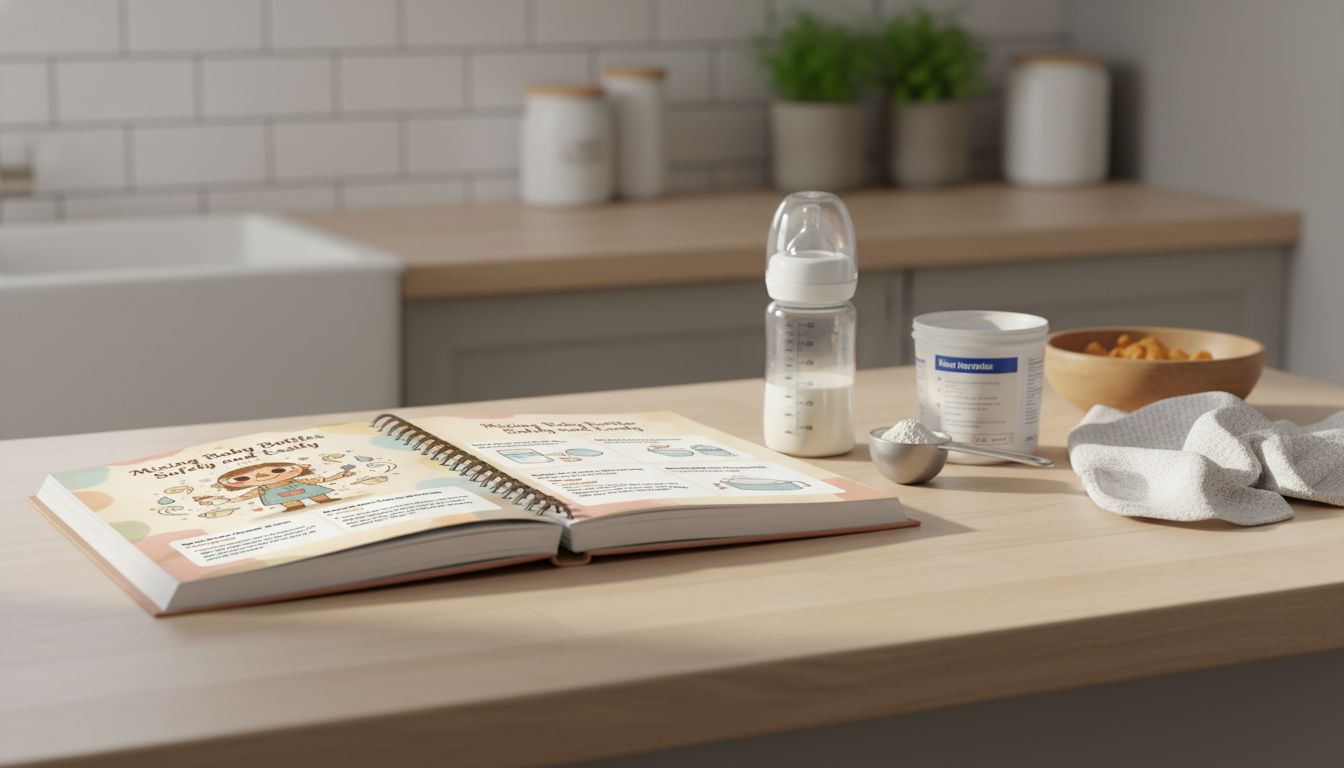
Mixing Baby Bottles Safely and Easily: A Step-by-Step Guide for New Parents
Mixing formula can feel deceptively simple, yet small mistakes—like incorrect water temperature, uneven scoops, or unsafe storage—can affect a baby’s comfort and safety. The goal is to build a routine that’s easy to repeat during day-to-day feeds, sleepy night feeds, and on-the-go bottles, so every serving stays consistent.
What “safe mixing” means (and why details matter)
“Safe mixing” comes down to three goals every single time: correct concentration (the right powder-to-water ratio), low contamination risk (clean hands and tools), and safe temperature (during mixing, serving, and storage). Even small deviations can add up—too much water can dilute nutrients, while too much powder can be harder on digestion and hydration.
Start with the instructions on the specific formula container you’re using. Ratios can vary by brand, formulation, and whether it’s powder, concentrate, or ready-to-feed. Avoid improvising measurements or “rounding” scoops.
Extra caution is recommended for higher-risk situations—such as premature infants, babies under 2 months, or infants with immune challenges. In those cases, individualized pediatric guidance matters, including whether hotter water should be used when preparing powdered formula.
Before you start: clean setup and correct supplies
Begin with clean hands. Wash with soap and water (including under nails) and dry with a clean towel before handling bottle parts, nipples, rings, or the scoop. Use clean bottles and parts; when local guidance recommends sterilizing (or for younger infants), sanitize and let everything air-dry fully before use.
Gather what you need so you’re not searching mid-prep: a clean bottle, nipple/collar, the scoop that came with that formula, a safe water source, and a clean mixing surface. Keep the scoop dry and store it as directed—moisture inside the can can lead to clumping and inaccurate measurements.
Quick setup checklist
| Item | Why it matters | Quick tip |
|---|---|---|
| Clean hands | Reduces germ transfer | Wash for at least 20 seconds; clean under nails |
| Clean bottle parts | Limits bacterial growth | Air-dry fully on a clean rack |
| Safe water source | Protects against contaminants | Follow local guidance for tap/well water |
| Correct scoop | Ensures accurate ratio | Use only the scoop that comes with that formula |
| Clean workspace | Prevents accidental contamination | Wipe the counter before mixing |
Step-by-step: mixing a single bottle correctly
Step 1 — Measure water first
Pour the required amount of water into the bottle first, using the bottle markings or a separate measuring cup for extra accuracy. Measuring water before powder helps keep the final concentration consistent.
Step 2 — Check water temperature guidance
Some situations call for using hot water when preparing powdered formula because powdered formula is not sterile. Follow the formula label, pediatrician guidance, and trusted public health guidance such as the CDC instructions for preparing and storing powdered infant formula and the World Health Organization guidance.
Step 3 — Add powder using level scoops
Fill the scoop loosely, level it off (don’t pack it down and don’t use heaping scoops), and add the exact number of scoops the label requires for the water amount you measured. Small measuring “habits” are a common source of inconsistency—leveling every time reduces that risk.
Step 4 — Mix thoroughly
Cap the bottle and mix until no dry pockets remain. Shaking works well, but gentle swirling can reduce bubbles and foam. If you do shake vigorously, letting the bottle rest briefly can help bubbles settle.
Step 5 — Cool to feeding temperature if needed
If the bottle is warm, cool it under running cool water or in a cold-water bath. Avoid microwaving—microwaves can create hot spots even if the bottle feels lukewarm overall.
Step 6 — Test temperature safely
Step 7 — Feed and track timing
Common mixing mistakes and how to avoid them
Mixing with the wrong scoop
Packing powder or using heaping scoops
Adding powder before water
Eyeballing amounts during night feeds
Mixing ahead without safe storage
Safe storage, reheating, and travel routines
Time limits: Public health guidance often differentiates between (1) formula that has been prepared but not used, (2) formula kept at room temperature, and (3) bottles that have contacted a baby’s mouth. Use the formula label and resources like HealthyChildren.org (American Academy of Pediatrics) alongside your pediatrician’s recommendations, and discard when in doubt.
A printable routine for consistent bottles
Step-by-step help for new parents
For a clearer, caregiver-friendly walk-through—especially helpful during sleep-deprived weeks—see the Mixing Baby Bottles Safely and Easily | Step-by-Step Formula Mixing eBook for New Parents | How to Mix Formula Bottles Correctly Guide. It’s designed to support consistent preparation habits and troubleshoot common mistakes without guesswork.
For families who do a lot of driving and on-the-go feeds, keeping the car environment more comfortable can also help reduce rushed stops and mid-feed stress. The Magnetic Car Window Sunshade Curtains – UV Protection & Mosquito Repellent Mesh can be a practical add-on for warmer months and longer rides.
When to call the pediatrician
FAQ
Should formula be mixed with hot water or room-temperature water?
It depends on your baby’s age and risk factors, plus the formula label and local guidance. Because powdered formula isn’t sterile, some recommendations involve using hotter water for certain infants; follow your pediatrician’s instructions and avoid microwaving.
Is it okay to shake a baby bottle to mix formula?
Yes—shaking mixes formula effectively, but it can create more bubbles. Swirling can reduce foam, and either method is fine as long as the powder fully dissolves.
How long can prepared formula sit out or stay in the fridge?
Room-temperature limits are shorter than refrigerated storage, and bottles that have touched a baby’s mouth should be discarded sooner. Follow the formula label and public health guidance, label bottles with a “made at” time, and discard when unsure.
















Leave a comment