Decode the Strategy Behind a Global Luxury Powerhouse
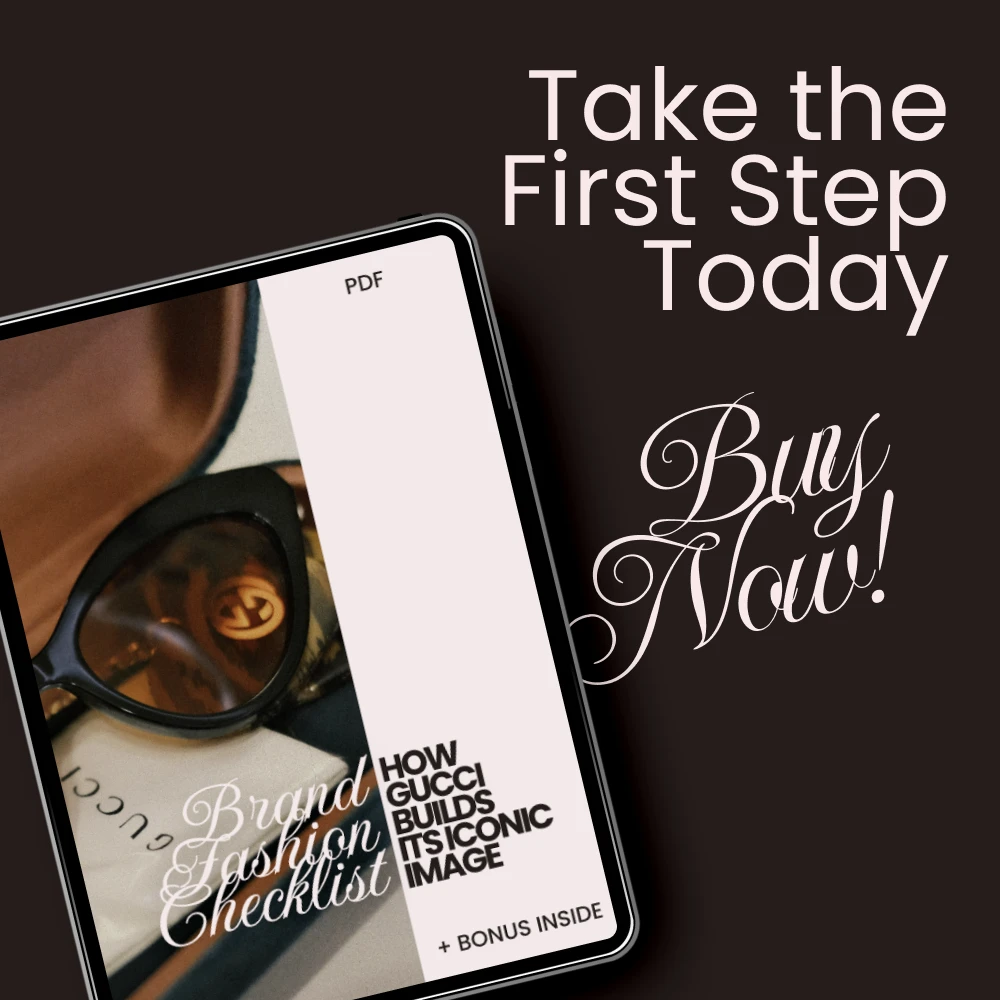
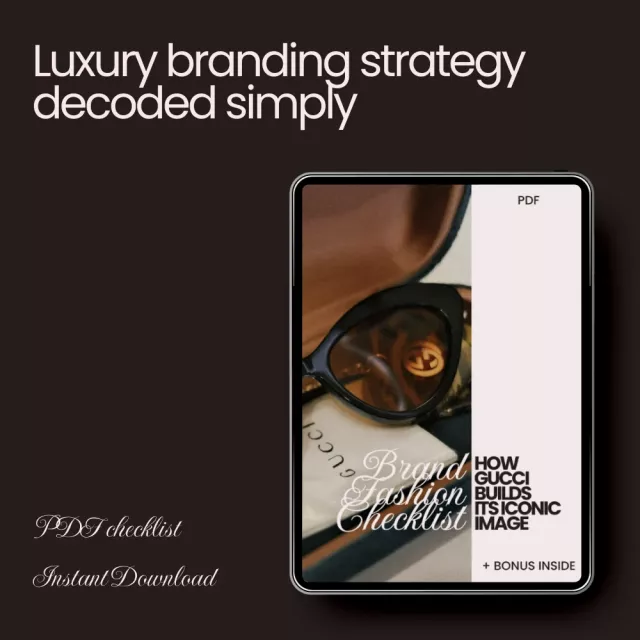
If you’ve ever wondered how Gucci maintains its cultural dominance decade after decade, this in-depth Brand Fashion Checklist: How Gucci Builds Its Iconic Image breaks it down step by step. Gucci isn’t just designing clothes — it’s engineering desire, identity, and aspiration. This professionally designed digital checklist gives you a strategic lens into how gucci builds its image and protects its luxury positioning in an ever-changing market.
Whether you’re a fashion buyer seeking inspiration or a brand builder looking for competitive insight, this checklist transforms Gucci’s branding brilliance into practical, actionable lessons you can apply immediately.
What’s Inside the Checklist
- Heritage & Storytelling Analysis — Understand how Gucci leverages its 1921 Florence roots, iconic symbols like the GG monogram and horsebit, and narrative-driven collections.
- Creative Direction Breakdown — Explore how bold artistic leadership and runway-as-theater experiences fuel conversation and recognition.
- Celebrity & Cultural Strategy — Learn how high-profile ambassadors and pop culture integration amplify visibility.
- Controlled Exclusivity Framework — Discover how premium pricing, limited distribution, and boutique environments protect prestige.
- Visual Consistency Guide — See how Gucci maintains a recognizable aesthetic across campaigns, packaging, and digital platforms.
- Innovation Without Identity Loss — Examine collaborations, digital fashion experimentation, and sustainability positioning.
- Buyer Insight Notes — Strategic takeaways after every section so you can apply the lessons immediately.
Who Is This For?
- Fashion buyers seeking deeper brand evaluation skills
- Fashion business owners and startup founders
- Marketing and branding students
- Luxury enthusiasts curious about how gucci builds its image
- Content creators analyzing high-end fashion strategy
Why This Checklist Is Different
Unlike generic branding guides, this resource focuses on one of the most culturally influential luxury houses in the world and translates its strategy into a clear, structured evaluation tool. It’s not theory-heavy or abstract. It’s practical, concise, and designed for real-world application.
You’re not just reading about branding — you’re reverse-engineering it.
- Clear positioning framework
- Emotional storytelling breakdown
- Cultural relevance mapping
- Visual discipline checklist
- Strategic exclusivity insights
Practical Benefits
- Strengthen your ability to evaluate luxury brands
- Improve your own fashion brand positioning
- Gain clarity on high-end pricing strategy
- Understand cultural relevance in modern fashion
- Learn how image is engineered — not improvised
Gucci’s success is not accidental. It’s built through intention, discipline, and bold creative direction. Now you can study the exact framework behind it.
Download the Brand Fashion Checklist: How Gucci Builds Its Iconic Image today and start analyzing luxury branding like an insider.
Order cancellation
All orders can be cancelled until they are shipped. If your order has been paid and you need to make a change or cancel an order, you must contact us within 12 hours. Once the packaging and shipping process has started, it can no longer be cancelled.
Refunds
Your satisfaction is our #1 priority. Therefore, you can request a refund or reshipment for ordered products if:
- If you did not receive the product within the guaranteed time( 45 days not including 2-5 day processing) you can request a refund or a reshipment.
- If you received the wrong item you can request a refund or a reshipment.
- If you do not want the product you’ve received you may request a refund but you must return the item at your expense and the item must be unused.
We do not issue the refund if:
- Your order did not arrive due to factors within your control (i.e. providing the wrong shipping address)
- Your order did not arrive due to exceptional circumstances outside the control of Fancin (i.e. not cleared by customs, delayed by a natural disaster).
- Other exceptional circumstances outside the control of https://fancin.com
*You can submit refund requests within 15 days after the guaranteed period for delivery (45 days) has expired. You can do it by sending a message on Contact Us page
If you are approved for a refund, then your refund will be processed, and a credit will automatically be applied to your credit card or original method of payment, within 14 days.
Exchanges
If for any reason you would like to exchange your product, perhaps for a different size in clothing. You must contact us first and we will guide you through the steps.
Please do not send your purchase back to us unless we authorise you to do so.
Your files will be available to download once payment is confirmed.



The heritage and storytelling section alone changed how I think about brand positioning.
I run a small streetwear label and the breakdown of Gucci's visual consistency across platforms gave me a concrete framework to audit my own channels. The buyer insight about image weakening when visuals get inconsistent hit hard — I realized I had three different color palettes across my Instagram, website, and packaging. I spent the weekend after reading this unifying everything into one cohesive look. My engagement jumped almost immediately. The checklist format made it easy to keep coming back and scoring myself on each pillar.
The controlled exclusivity section was eye-opening. I never connected premium pricing to perception management so clearly before. Short, actionable, and I've already bookmarked the buyer insights.
Loved how it unpacks the GG monogram and horsebit as legacy markers rather than trends 🔥
The point about selective distribution protecting prestige finally clicked for me. I used to think wider availability was always better, but this reframed scarcity as a branding tool. Applied it to my jewelry line by pulling out of two marketplaces and the perceived value went up. Wish the sustainability section had the same depth.
Clean breakdown of how runway shows function as theater, not just product displays.
The section on cultural risk-taking and gender fluidity really reframed how I approach mood boards for my clients. I style editorial shoots and I kept defaulting to safe, expected looks. After reading this, I pitched a maximalist concept that my client initially questioned. It ended up being our most-shared campaign of the year. The checklist format makes it dead simple to revisit before any creative brief.
Read it on my lunch break and immediately started rethinking my brand's storytelling.
The innovation section covering digital fashion and NFTs felt surface-level compared to the rest. Everything on heritage, storytelling, and visual identity was sharp though — the checklist format keeps you focused.
The buyer insights at the end of each section tie everything together nicely.
Something that explains luxury branding without drowning you in jargon. The celebrity alignment section was my favorite — the way it frames pop culture integration as a deliberate visibility strategy rather than vanity made me rethink my own partnerships.
I'm a fashion merchandising student and used the six-pillar framework for a final project on brand architecture. The heritage section gave me a clean thesis about how Gucci's founding story in 1920s Florence gets woven into every collection. The visual consistency analysis helped me build a comparison across three luxury houses. My professor asked where I found such a structured breakdown. I've gone back to it for two more assignments since. Easily the most practical branding resource I've used this semester.
Quick read, real substance — the comparison between boutique experience and digital identity showed me gaps in my own brand.
❤️🔥⭐
The narrative-driven collections concept is something every small brand should internalize.
The way it connects each element — heritage into visual consistency, consistency into exclusivity — rather than treating them as isolated tactics is what sets this apart.
Solid checklist overall. Wish the sustainability section went deeper into how Gucci communicates those efforts in actual campaigns — it felt brief next to the storytelling and creative direction analysis. Still very useful as a framework.
I own a vintage resale shop and had never thought about how boutique experience design directly elevates product perception. Before reading this, my store layout was purely functional — racks, tags, fluorescent lighting. I redesigned the fitting area to feel curated, added warm lighting, and started treating the space like a branded environment. Regulars started commenting that something felt different. Sales on higher-ticket pieces went up within weeks.
The celebrity alignment section broke down something I always sensed but couldn't articulate.
Practical, focused, no fluff — exactly what I needed before my brand strategy meeting.
Understanding the green-red-green stripe as a legacy marker and not a seasonal detail changed how I think about designing signature elements for my own line.
I appreciated the structure but the bonus section at the end felt promotional and out of place. The core six sections are well done though — the creative direction breakdown under Michele and De Sarno alone is worth the read.
Sent this to my entire design team after reading the visual consistency section.
The checklist format makes this surprisingly actionable. I went through each section and scored my own brand against it — heritage, visual identity, exclusivity, celebrity alignment — and found three major blind spots I'd been ignoring for months. Two of them were in the visual consistency area, which I thought was my strongest pillar. Spent a month tightening my packaging and campaign photography to match my digital presence. The customer feedback since has been night and day.
The point about Gen Z digital storytelling keeping Gucci relevant across generations is so well made ✨