-
Shop
- Adidas
- Advanced Technologies
- AI Career Advantage Collection
- AI Skills for Creators & Freelancers
- AI Client Management
- AI Ethics
- AI Mindset
- AI Tools & Prompts
- AI Writing & Content Creation
- Audio, Voice & Music
- Design & Visual Creation
- Email, Messaging & Communication
- Freelancing & Business
- Marketing, Ads & Conversion
- Productivity, Workflow & Automation
- SEO & Search Optimization
- Social Media Content & Growth
- Strategy, Planning & Analytics
- Video Creation & Editing
- AI Skills Mastery 2026 Collection
- Bathroom
- Best-Sellers
- Car Accessories
- Confidence
- Dating & Social Skills
- Digital Resources
- AI & Technology
- AI Skills
- Beauty
- Budgeting & Saving
- Car Buying & Ownership
- Cozy Feast Collection
- Dating & Social Confidence
- Electronics & Technology
- Entrepreneurship & Business Growth
- Financial Education
- Financial Independence
- Financial Mindset & Psychology
- Goal Setting
- Hobbies
- Home Styling & Organization
- Kitchen & Cooking
- Kitchen & Recipes
- Leadership
- Mindfulness
- Mindset
- Online Business
- Parenting & Child Development
- Personal Style & Fashion
- Pet Lifestyle & Wellness
- Positive Thinking
- Sleep Improvement
- Smart Life with AI
- Stress Management & Relaxation
- Travel Planning
- Wellness
- Wellness & Self-Care
- Yoga & Fitness
- Yoga & Mind-Body Practices
- Education & Learning
- Family & Parenting
- Fashion
- Furniture
- Gadgets
- Health & Beauty
- Health & Wellness
- Home & Garden
- Home Decor
- Home Electronics
- Kids & Babies
- Kitchen
- Kitchen Best-Sellers
- Lighting
- Luxury Brands Collection
- Nike
- Online Business for Beginners
- Patio, Lawn & Garden
- Personal Growth
- Pet Care
- Pet Supplies
- Pets
- Smart Amazon Shopping
- Sport & Outdoors
- Stress Relief & Relaxation
- TikTok Growth & Monetization Mastery
- Travel
- Travel & Adventure
- Wealth
- Popular
- Best deals
Decade-to-Year Planning: Set 10-Year Goals That Stick

Decade by Design: A Practical Way to Set 10-Year Goals and Turn Them Into Strong Year Plans
Long-term goals feel inspiring until they become vague. A decade plan becomes workable when it’s translated into clear priorities, measurable outcomes, and a repeatable yearly planning rhythm. The system below keeps your 10-year vision ambitious while making your next week and next quarter obvious—so progress stays visible without burning out.
Start with a 10-year vision that is specific enough to guide choices
Begin by writing a “10-years-from-now” snapshot across a few life areas: career, finances, health, relationships, learning, lifestyle, and contribution. The key is to make it concrete enough that it can guide decisions (what you say yes/no to), not just feel-good statements.
Use indicators you can point to: a role or title you’re working toward, an income range, a savings/investing rate, fitness markers (strength numbers, resting heart rate, consistency), a location or living setup, and routines you want to be known for. If your vision can’t be measured or observed, it can’t steer a plan.
Then write a short “why it matters” statement—one paragraph that explains what this decade vision protects or enables. That becomes your anchor during hard seasons, when motivation dips and convenience tempts you off-track. Finally, list what must be true for the vision to happen: skills, credentials, habits, network, resources, and environment. This list is where your year goals will come from.
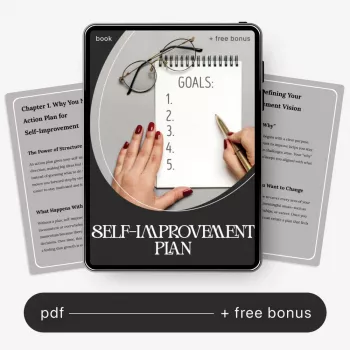
If you want structured prompts to move from vision to action without overthinking, a guided resource like Decade by Design: Your Ultimate Guide to Setting Life-Changing 10-Year Goals (eBook) can help you capture the vision details that usually get skipped (constraints, trade-offs, and review rituals).
Choose 3–5 decade themes instead of 30 disconnected goals
Once you have a full snapshot, group it into 3–5 themes. Themes reduce noise. They prevent the common trap of setting dozens of goals that compete for the same time and energy.
Examples: Build Financial Independence, Master a Craft, Strengthen Health, Create a Home Base, Deepen Relationships. For each theme, define a north-star metric you can track. This keeps the theme from becoming a slogan and turns it into a scoreboard.
Also name the trade-offs: what will be deprioritized to protect focus? A decade plan becomes real when it includes what you will not do. Finally, check balance—include at least one well-being theme and one growth/career theme to reduce regret later.
Decade theme → annual focus map (example template)
| Decade theme | 10-year outcome | This year’s focus | Quarterly milestone | Weekly habit |
|---|---|---|---|---|
| Financial independence | Emergency fund + investing system | Save 15% income | Automate transfers + pay off one high-interest debt | Weekly money review (20 min) |
| Career mastery | Recognized specialist | Earn a credential / ship a portfolio | Complete 1 course + 1 project per quarter | 5 hours deep work per week |
| Health baseline | Strong, pain-free body | Build strength + sleep routine | Train 3x/week + consistent bedtime window | Plan workouts every Sunday |
| Relationships | Supportive inner circle | Create recurring connection rituals | Monthly quality time plan | One meaningful reach-out per week |
Turn decade themes into life-changing year goals
For a simple way to make completion visible, borrow the logic behind OKRs—objectives with measurable key results—so you always know what “on track” means. Google’s re:Work overview is a practical reference: OKR Basics (Google re:Work guide).
Break year goals into quarterly plans that reduce overwhelm
Build weekly execution: routines, time blocks, and tracking
Close the loop with a weekly review: note wins, obstacles, next actions, and one improvement for the coming week. A practical tool for staying consistent is “implementation intentions,” often phrased as if–then rules, which research links to better follow-through; see the American Psychological Association overview site for more context: American Psychological Association (APA). For a quick definition of goals as a psychological concept, the APA dictionary is also useful: Goal Setting and Achievement (APA Dictionary of Psychology).
If a physical reminder helps you keep a planning ritual, consider a dedicated “review station” on a counter or desk—something as simple as a tray that holds your notebook and pen. The Luxury 12-Inch Stainless Steel Decorative Tray can make that weekly review feel like a set routine instead of a chore.
Make goals resilient: obstacles, motivation dips, and course corrections
Finally, celebrate milestones with rewards that reinforce identity and consistency. A meaningful, durable item can act like a “marker” of the season you leveled up. For example, the Luxury Men’s Automatic Mechanical Watch can be a tangible reward tied to consistency—something you earn when you complete a quarter’s keystone milestone.
A guided workbook option for structuring the full decade-to-year plan
Decade by Design: Your Ultimate Guide to Setting Life-Changing 10-Year Goals (eBook) is a practical option to help you document your themes, define measurable “done” outcomes, and build review rituals so adjustments feel normal—not like failure.
FAQ
How many 10-year goals should be set at once?
Focus on 3–5 decade themes rather than a long list of separate goals. Fewer themes create clarity, make trade-offs explicit, and dramatically improve follow-through because your time and attention aren’t constantly split.
What makes a year goal “life-changing” instead of just ambitious?
A life-changing year goal is measurable, clearly aligned to a decade theme, and supported by identity-level habits (what you do weekly). It also has a specific “done” definition and constraints that prevent burnout while you pursue it.
How often should a long-term plan be reviewed?
Use weekly quick reviews to stay on course, monthly check-ins to adjust tactics, quarterly resets to re-sequence priorities, and an annual reflection to set the next year’s goals without rewriting the entire decade plan.
Recommended for you


Choose the Right Travel Backpack Using AI (Any Trip)
Jun 19, 2026













Leave a comment