HomeBlogBlogMindful Dating Red Flags: Printable Checklist & Scripts

Mindful Dating Red Flags: Printable Checklist & Scripts

Mindful Dating Red Flags: Printable Checklist & Scripts

Mindful Dating Red-Flag Checklist: A Printable Guide for Emotional Safety and Clear Boundaries

Dating can feel exciting and confusing at the same time—especially when early chemistry makes it easy to ignore small warning signs. A mindful approach focuses on emotional safety, respectful pacing, and boundary clarity. This checklist-style guide helps spot concerning patterns early, name them calmly, and choose next steps that protect well-being without spiraling into overthinking.

What “emotional safety” looks like in early dating

Emotional safety isn’t about perfection—it’s about feeling steady, respected, and free to be yourself. In the early stage, look for these basics:

  • Consistency between words and actions (plans, communication, follow-through).
  • Respect for “no,” “not yet,” and “I need time” without punishment, pouting, or pressure.
  • Space for feelings and preferences without ridicule, sarcasm, or invalidation.
  • Repair after conflict: accountability, listening, and changed behavior rather than defensiveness.
  • A mutual pace where interest grows without urgency, guilt, or “tests.”

If you routinely feel calmer after seeing them—not smaller, tense, or on edge—that’s meaningful information.

How to use a red-flag checklist without second-guessing yourself

A checklist works best as a reflection tool, not a courtroom. The goal is to reduce mental noise and focus on evidence.

  • Check patterns, not isolated moments: one awkward comment is different from repeated disrespect.
  • Write down concrete behaviors (what happened, when, what was said) to reduce rumination.
  • Rate impact: “How did this affect safety, trust, autonomy, or self-esteem?”
  • Use a short observation window (for example, 2–3 dates or 2 weeks), then reassess.
  • Turn observations into boundaries and questions instead of trying to predict the future.

If you’re unsure whether something “counts,” note it anyway and watch what happens when you communicate a clear preference. Respectful people don’t punish honesty.

Early warning signs that often show up before commitment

Many concerning dynamics appear early, long before labels. These signs don’t require panic—but they do deserve attention.

  • Boundary pushing disguised as charm: “Come on, don’t be like that,” or repeated “jokes” after a clear request.
  • Fast intimacy that skips trust-building: pressure for exclusivity, heavy future talk, or intense contact early on.
  • Control-by-critique: commenting on clothes, friends, hobbies, or “fixing” habits without being asked.
  • Emotional volatility: quick switches from idealizing to blaming, sulking, or withdrawing when disappointed.
  • Blame patterns: every ex is “crazy,” every conflict is someone else’s fault, no ownership of choices.
  • Inconsistent presence: frequent cancellations, disappearing acts, or only reaching out late at night.
  • Privacy and honesty issues: evasive answers, hidden relationship status, or stories that don’t add up.

For more context on unhealthy relationship dynamics, the American Psychological Association’s overview of healthy relationships is a helpful reference point.

A simple “spot flags early” decision table

After a date, combining behavior + frequency + response to feedback usually gives the clearest picture. Use this quick guide to decide whether to continue, clarify, or step back.

Flag levels and what to do next

Flag level Common signs Best next step
Green Respects boundaries, communicates clearly, consistent follow-through Keep dating; notice what supports calm and trust
Yellow Occasional inconsistency, unclear intentions, mild boundary testing that stops when addressed Clarify needs; set one specific boundary; watch response over time
Orange Repeated pressure, dismissive humor, guilt-tripping, hot-and-cold attention Pause; reduce access; ask direct questions; set firm limits and a timeframe
Red Coercion, threats, stalking, isolation attempts, lying, aggressive behavior, violating consent End contact; prioritize safety; consider support from friends/professionals

If you’re ever unsure about consent and what respectful behavior looks like, RAINN’s consent guide lays it out clearly.

Boundary scripts for common situations (short and calm)

Boundaries land best when they’re simple, direct, and focused on what you will do next. Try these scripts as-is, or adapt them to your voice:

  • Pace: “I’m enjoying getting to know you, and I’m not rushing exclusivity. Let’s keep it at a pace that feels good for both of us.”
  • Time: “I’m not available tonight. I can do Saturday afternoon or another day.”
  • Physical: “I’m not comfortable with that. Please stop.”
  • Communication: “I don’t do last-minute plans. If you’d like to see me, let’s plan ahead.”
  • Privacy: “I’m not sharing passwords or location. Trust grows through consistency, not access.”
  • Respect: “That comment doesn’t work for me. If it happens again, I’ll end the date.”

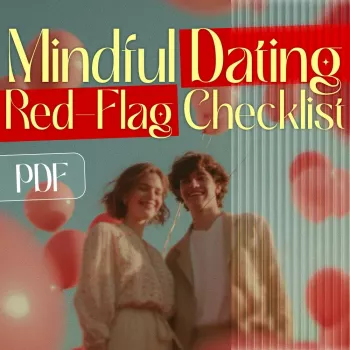
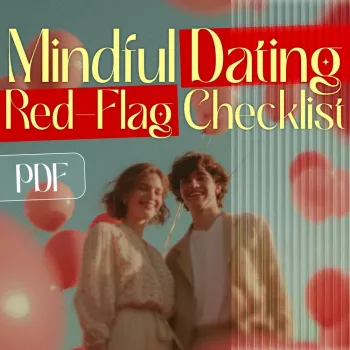
Printable tool: Mindful Dating Red-Flag Checklist

If you prefer a structured way to reflect (without looping through “what ifs”), a printable worksheet can make it easier to separate anxiety from evidence.

Mindful Dating Red-Flag Checklist (Printable) is available for $4.99.

Small “support items” that can reinforce mindful dating

When a checklist points to safety concerns

For additional warning signs and support options, the National Domestic Violence Hotline’s warning signs resource is a strong starting point.

FAQ

How many red flags are “enough” to stop dating someone?

Focus on severity and pattern. One severe safety-related behavior can be enough; otherwise, look for repeated issues and how they respond to boundaries and feedback.

What if the checklist makes me feel anxious or overly suspicious?

Use it briefly after dates instead of constantly monitoring. Track concrete behaviors and choose one boundary or question to clarify so you don’t spiral into interpretations.

Can a yellow flag turn into a green flag?

Sometimes—if the person responds well to direct communication, changes behavior consistently, and respects boundaries without resentment or punishment.

Was this article helpful?

Yes No
Leave a comment
Top

Yay! 10% Off Just for You!

Join our community and enjoy 10% off your first order. Subscribe for exclusive deals!

Shopping cart

×