-
Shop
- Advanced Technologies
- AI Career Advantage Collection
- AI Skills for Creators & Freelancers
- AI Client Management
- AI Ethics
- AI Mindset
- AI Tools & Prompts
- AI Writing & Content Creation
- Audio, Voice & Music
- Design & Visual Creation
- Email, Messaging & Communication
- Freelancing & Business
- Marketing, Ads & Conversion
- Productivity, Workflow & Automation
- SEO & Search Optimization
- Social Media Content & Growth
- Strategy, Planning & Analytics
- Video Creation & Editing
- AI Skills Mastery 2026 Collection
- Bathroom
- Best-Sellers
- Car Accessories
- Confidence
- Dating & Social Skills
- Digital Resources
- AI & Technology
- AI Skills
- Beauty
- Car Buying & Ownership
- Cozy Feast Collection
- Electronics & Technology
- Financial Education
- Hobbies
- Home Styling & Organization
- Kitchen & Recipes
- Mindset
- Online Business
- Parenting & Child Development
- Personal Style & Fashion
- Pet Lifestyle & Wellness
- Travel Planning
- Wellness
- Yoga & Fitness
- Education & Learning
- Family & Parenting
- Fashion
- Furniture
- Gadgets
- Health & Beauty
- Health & Wellness
- Home & Garden
- Home Decor
- Home Electronics
- Kids & Babies
- Kitchen
- Kitchen Best-Sellers
- Lighting
- Nike
- Patio, Lawn & Garden
- Personal Growth
- Pet Care
- Pet Supplies
- Pets
- Smart Amazon Shopping
- Sport & Outdoors
- Travel
- Travel & Adventure
- Wealth
- Popular
- Best deals
Natural Hair Bundle for Care, Planning & Braiding
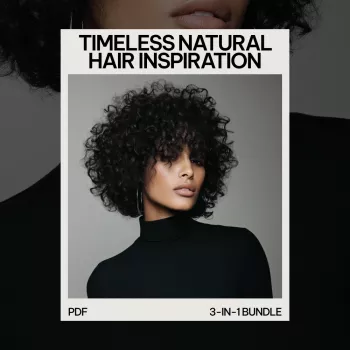
Timeless Natural Hair Inspiration Bundle: A Complete System for Planning, Care, and Braiding
A well-rounded natural hair library can make wash days simpler, styling more consistent, and protective looks easier to plan. The Timeless Natural Hair Inspiration Bundle brings together three complementary resources—visual inspiration, technique-driven care knowledge, and step-by-step braiding practice—so routines feel less like guesswork and more like a repeatable system. Instead of bouncing between random tutorials and trial-and-error product layering, you can follow a clearer path: decide on a look, prepare the hair properly, execute with cleaner technique, and maintain without stressing your scalp or edges.
What’s Included in the Bundle
This bundle is structured so each resource covers a different part of the same goal: healthier hair habits that support protective styling results.
- Crowning Glory: a style-forward inspiration resource to help map looks to length, density, and lifestyle needs.
- Black Hair Mastery: a fundamentals-focused guide centered on understanding texture, porosity, moisture balance, and healthy handling.
- Braiding Guide: structured instruction for foundational braids, sectioning, tension control, and clean parting.
- Designed to work together: inspiration helps choose a look, mastery supports hair health, braiding steps turn the plan into a finished style.
How Each Resource Supports the Same Hair Goal
| Resource | Best for | Typical outcomes | When to use it |
|---|---|---|---|
| Crowning Glory | Choosing styles and planning looks | Clear visual direction; fewer abandoned styles | Before styling; when building a lookbook |
| Black Hair Mastery | Building a dependable care routine | Better moisture retention; fewer tangles and breakage | Wash day; weekly maintenance; troubleshooting |
| Braiding Guide | Learning braids and improving technique | Cleaner parts; consistent tension; longer-lasting protective styles | During styling sessions; skill-building practice |
Who This Bundle Helps Most
- Beginners who want a structured path: understand hair needs first, then learn techniques, then expand styles confidently.
- Intermediate naturalistas refining consistency: improve detangling, product layering, and protective styling results.
- Parents and caregivers styling kids’ hair: learn gentle handling, quick sectioning, and braid basics to reduce tears and time.
- Anyone rotating protective styles: build a plan that balances style longevity with scalp comfort and edge protection.
Core Hair Health Principles the Guides Reinforce
Great braids don’t start with your hands—they start with preparation. A consistent routine supports softer detangling, smoother parts, and styles that last without feeling “too tight.” For general hair and scalp care guidance, the American Academy of Dermatology Association offers helpful basics, and the Mayo Clinic outlines when hair shedding or loss may warrant professional attention.
- Moisture vs. hydration: pair water-based steps with sealing strategies to slow moisture loss.
- Detangling with intent: work in sections, start at the ends, and detangle on damp, conditioned hair to reduce snapping.
- Low-tension styling: aim for secure—not tight—braids; prioritize comfort and scalp circulation.
- Scalp care basics: keep buildup under control, avoid heavy layering at the roots, and pay attention to itching or flakes.
- Protective styling done right: protect ends, avoid excessive weight, and schedule breaks between long installs.
Braiding Mastery: Skills That Change Everything
If braids look uneven, puff up too quickly, or leave your scalp sore, the fix often comes down to three fundamentals: sectioning, tension, and finishing. Building hand control takes repetition, but a smart progression prevents frustration.
- Parting and sectioning: use clean lines, consistent subsection size, and clips to prevent re-tangling.
- Tension control: anchor at the base with gentle firmness, then maintain even tension throughout the braid length.
- Feed-in and extension handling (where applicable): keep additions small and consistent to reduce bulk and stress.
- Finishing methods: secure ends appropriately, smooth flyaways without overloading product, and set the style for longevity.
- Practice progression: start with three-strand braids, then move to cornrows, then more complex patterns once hand control improves.
Troubleshooting Common Braiding Problems
| Issue | Likely cause | Quick fix | Prevention next time |
|---|---|---|---|
| Bumps at the base | Too much product or uneven tension | Lightly smooth and re-braid that section | Use minimal product at roots; keep tension even |
| Sore scalp | Braids too tight or sections too small | Loosen or redo; avoid pulling edges | Braid for comfort; keep edges low-tension |
| Frizz early on | Dry hair, rough handling, or no setting step | Foam/mousse + scarf set | Start on properly prepped hair; set after styling |
| Uneven braid size | Inconsistent sectioning and strand control | Redo with measured parts | Use a rat-tail comb; mirror section sizes |
Building a Simple Routine Using the Bundle
Example Weekly Rhythm
| Day | Focus | Time range | Notes |
|---|---|---|---|
| Wash day | Cleanse, deep condition, detangle | 60–120 min | Work in 4–8 sections for control |
| Style day | Braid install or twist set | 45–180 min | Plan parts and gather tools first |
| Midweek | Light refresh + scalp check | 10–20 min | Hydrate lightly; avoid heavy root buildup |
| Weekend | Edge/length check + protective reset | 15–30 min | Adjust accessories; reduce tension points |
Tools and Setup for Cleaner Results
Bundle Details and Where to Get It
- Timeless Natural Hair Inspiration Bundle: Crowning Glory, Black Hair Mastery & Braiding Guide
- Outfit Ideas for Light Blue Jeans – Easy Everyday & Chic Styling Guide | Digital Fashion Guide Download
FAQ
Is this bundle suitable for beginners with natural hair?
Yes. Start with the care fundamentals (prep, moisture balance, gentle detangling) so your hair is easier to handle, then use the braiding lessons to build skill step by step while the inspiration guide helps you choose realistic styles for your current length and schedule.
How can braids be done without damaging edges or causing scalp soreness?
Focus on low-tension sectioning, avoid tiny parts around the hairline, and use minimal product at the roots to prevent buildup and bumps. If a braid hurts, it’s too tight—redo it, and schedule breaks between installs to let the scalp and edges recover.
How long should a protective braided style be kept in?
A practical range is about 2–6 weeks, depending on scalp comfort, buildup, and how well you can cleanse and moisturize. Remove sooner if there’s persistent itching, tightness, matting at the roots, or excessive shedding during refreshes.














Leave a comment