-
Shop
- Adidas
- Advanced Technologies
- AI Career Advantage Collection
- AI Skills for Creators & Freelancers
- AI Client Management
- AI Ethics
- AI Mindset
- AI Tools & Prompts
- AI Writing & Content Creation
- Audio, Voice & Music
- Design & Visual Creation
- Email, Messaging & Communication
- Freelancing & Business
- Marketing, Ads & Conversion
- Productivity, Workflow & Automation
- SEO & Search Optimization
- Social Media Content & Growth
- Strategy, Planning & Analytics
- Video Creation & Editing
- AI Skills Mastery 2026 Collection
- Bathroom
- Best-Sellers
- Car Accessories
- Confidence
- Dating & Social Skills
- Digital Resources
- AI & Technology
- AI Skills
- Beauty
- Budgeting & Saving
- Car Buying & Ownership
- Cozy Feast Collection
- Electronics & Technology
- Entrepreneurship & Business Growth
- Financial Education
- Financial Independence
- Financial Mindset & Psychology
- Goal Setting
- Hobbies
- Home Styling & Organization
- Kitchen & Recipes
- Leadership
- Mindfulness
- Mindset
- Online Business
- Parenting & Child Development
- Personal Style & Fashion
- Pet Lifestyle & Wellness
- Positive Thinking
- Sleep Improvement
- Smart Life with AI
- Stress Management & Relaxation
- Travel Planning
- Wellness
- Yoga & Fitness
- Yoga & Mind-Body Practices
- Education & Learning
- Family & Parenting
- Fashion
- Furniture
- Gadgets
- Health & Beauty
- Health & Wellness
- Home & Garden
- Home Decor
- Home Electronics
- Kids & Babies
- Kitchen
- Kitchen Best-Sellers
- Lighting
- Luxury Brands Collection
- Nike
- Patio, Lawn & Garden
- Personal Growth
- Pet Care
- Pet Supplies
- Pets
- Smart Amazon Shopping
- Sport & Outdoors
- Stress Relief & Relaxation
- Travel
- Travel & Adventure
- Wealth
- Popular
- Best deals
Stop Dogs Chewing Furniture: Quick Fixes & 7-Day Plan
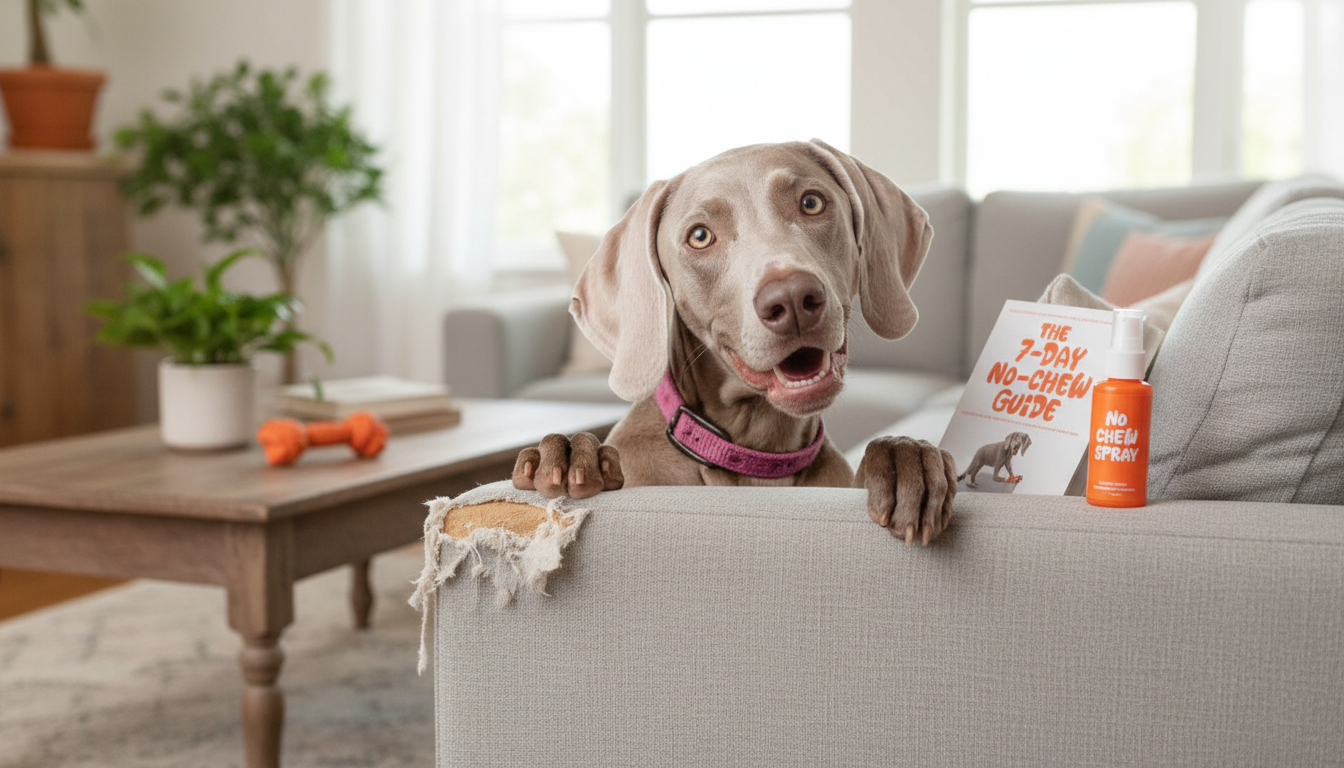
Stop Dog Chewing Furniture: Fast Fixes and Lasting Habits
Furniture chewing is usually a blend of normal canine behavior and a problem that needs direction—teething, boredom, stress, or an unmet need for exercise. The quickest wins come from preventing access, offering better chew options, and rewarding the right choices, while also identifying what’s driving the chewing in the first place.
Figure out why the chewing is happening
Chewing is information. Before correcting it, look for patterns: what gets chewed, when it happens, and what your dog was doing right before. That combination often points to the real trigger.
- Teething (common under 6–8 months): sore gums, frequent mouthing, and extra chewing when tired.
- Boredom or excess energy: chewing ramps up after long inactive periods or when left alone without a job to do.
- Separation stress or anxiety: chewing near exits, windows, or items that smell like family members.
- Attention-seeking: chewing starts when people are busy; the dog checks for a reaction.
- Diet or medical factors: a sudden increase in chewing, drooling, pawing at the mouth, or appetite changes can point to dental pain or nausea—consider a vet check.
- Breed and age patterns: adolescents often test boundaries; working breeds commonly need structured outlets.
Chewing Clues and What They Usually Mean
| What gets chewed | When it happens | Likely cause | Best first move |
|---|---|---|---|
| Chair legs/baseboards | Evenings or after naps | Excess energy / boredom | Add exercise + provide a high-value chew and rotate toys |
| Cushions/soft edges | When alone | Separation stress / under-stimulation | Confinement plan + food puzzle + calm departures |
| Shoes/remote controls | During busy household moments | Attention-seeking / easy access | Pick up items + reward calm behavior + teach “leave it” |
| Table corners | Puppy stage, frequent mouthing | Teething | Chilled chew options + short training + naps |
| Random objects suddenly | Any time, new behavior | Medical or diet-related discomfort | Schedule vet/dental check and remove access |
Stop the damage today: immediate steps that work
Think “management first, training second.” Management prevents rehearsal of the chewing habit, which is often the fastest way to see improvement.
- Block access: use baby gates, close doors, and limit free roaming until habits improve.
- Supervise or confine: if you can’t keep eyes on your dog, use a crate or safe pen with approved chews.
- Interrupt without scaring: calmly say a neutral cue (“uh-uh”), then redirect to a chew and praise when they take it.
- Make furniture uninteresting: use safe, dog-appropriate deterrent sprays on test spots; reapply as directed.
- Remove temptation: pick up shoes, kids’ toys, and throw blankets that invite chewing.
- Increase enrichment immediately: scatter-feed kibble, offer lick mats, or food puzzles to replace stress chewing.
If your dog chews mostly when alone, treat it as a training project—avoid “catching up” with punishment after the fact. Many dogs simply don’t connect delayed corrections to the chewing that happened minutes (or hours) earlier.
Teach a clear replacement behavior
The goal isn’t “don’t chew.” The goal is “chew these things, in this place.” When the replacement is obvious and rewarding, furniture becomes less appealing.
- Choose a default chew station: a bed or mat near the family area with 2–3 approved items.
- Reward the right choice: quietly drop a treat when your dog chews approved items; this builds a strong preference.
- Train “leave it” for edges and corners: start with low-value items in your hand, then graduate to furniture proximity.
- Train “go to mat” to reduce roaming: short sessions, high reinforcement, then use during busy moments.
- Use calm repetition: consistency beats intensity; avoid yelling or physical punishment, which can increase anxiety chewing.
For households with multiple people, agree on one simple rule: if the dog is chewing the right item, praise softly and reward; if the dog targets furniture, redirect once and then increase management (gate, leash, pen) to prevent a repeat.
Choose safer chews and rotate for novelty
Many dogs chew more when the “approved” option is boring, too small, too hard, or the wrong texture. Match the chew to the dog, not the label.
A simple 7-day reset plan
When to get professional help
Helpful overviews from trusted organizations include the AVMA’s separation anxiety guide, the AKC’s chewing tips, and the ASPCA’s overview of destructive chewing.
A guided plan for stopping furniture chewing
For a structured, follow-along routine, see Stop Dog Chews Fast: The Ultimate Guide on What to Do When Your Dog Chews Furniture.
If you’re protecting higher-end pieces while training is in progress, reducing access and temptation matters. Temporarily moving “favorite targets” out of reach can save finishes and corners—especially for smaller accent furniture like the Wabi-Sabi Style Vintage Hourglass Side Table. For surfaces that collect tempting items (keys, remotes, snacks), creating a tidy landing zone can help reduce grab-and-chew opportunities, such as using the Luxury 12-Inch Stainless Steel Decorative Tray for Home, Kitchen & Countertop.
FAQ
How long does it take to stop a dog from chewing furniture?
Management can stop new damage within days, but building a reliable habit typically takes a few weeks of consistent supervision, redirection, and rewarding approved chews. Freedom should increase gradually as your dog proves they can make good choices.
Do bitter sprays work on furniture chewing?
They can help make furniture less interesting, but they work best when paired with training and better chew options. Reapply as directed and spot-test first to avoid affecting the finish.
What if my dog only chews furniture when left alone?
That pattern can signal separation stress or under-stimulation. Use safe confinement with enrichment, practice gradual alone-time training, and get professional help if your dog panics, injures themselves, or destroys items only during departures.
Recommended for you


6.5L Smoke-Reducing Air Fryer for Fast, Crispy Meals
Jun 21, 2026













Leave a comment