-
Shop
- Adidas
- Advanced Technologies
- AI Career Advantage Collection
- AI Skills for Creators & Freelancers
- AI Client Management
- AI Ethics
- AI Mindset
- AI Tools & Prompts
- AI Writing & Content Creation
- Audio, Voice & Music
- Design & Visual Creation
- Email, Messaging & Communication
- Freelancing & Business
- Marketing, Ads & Conversion
- Productivity, Workflow & Automation
- SEO & Search Optimization
- Social Media Content & Growth
- Strategy, Planning & Analytics
- Video Creation & Editing
- AI Skills Mastery 2026 Collection
- Bathroom
- Best-Sellers
- Car Accessories
- Confidence
- Dating & Social Skills
- Digital Resources
- AI & Technology
- AI Skills
- Beauty
- Budgeting & Saving
- Car Buying & Ownership
- Cozy Feast Collection
- Electronics & Technology
- Entrepreneurship & Business Growth
- Financial Education
- Financial Independence
- Financial Mindset & Psychology
- Goal Setting
- Hobbies
- Home Styling & Organization
- Kitchen & Recipes
- Leadership
- Mindfulness
- Mindset
- Online Business
- Parenting & Child Development
- Personal Style & Fashion
- Pet Lifestyle & Wellness
- Positive Thinking
- Sleep Improvement
- Smart Life with AI
- Stress Management & Relaxation
- Travel Planning
- Wellness
- Yoga & Fitness
- Yoga & Mind-Body Practices
- Education & Learning
- Family & Parenting
- Fashion
- Furniture
- Gadgets
- Health & Beauty
- Health & Wellness
- Home & Garden
- Home Decor
- Home Electronics
- Kids & Babies
- Kitchen
- Kitchen Best-Sellers
- Lighting
- Luxury Brands Collection
- Nike
- Online Business for Beginners
- Patio, Lawn & Garden
- Personal Growth
- Pet Care
- Pet Supplies
- Pets
- Smart Amazon Shopping
- Sport & Outdoors
- Stress Relief & Relaxation
- TikTok Growth & Monetization Mastery
- Travel
- Travel & Adventure
- Wealth
- Popular
- Best deals
Build Beginner Confidence with AI: A 14-Day Practice Plan
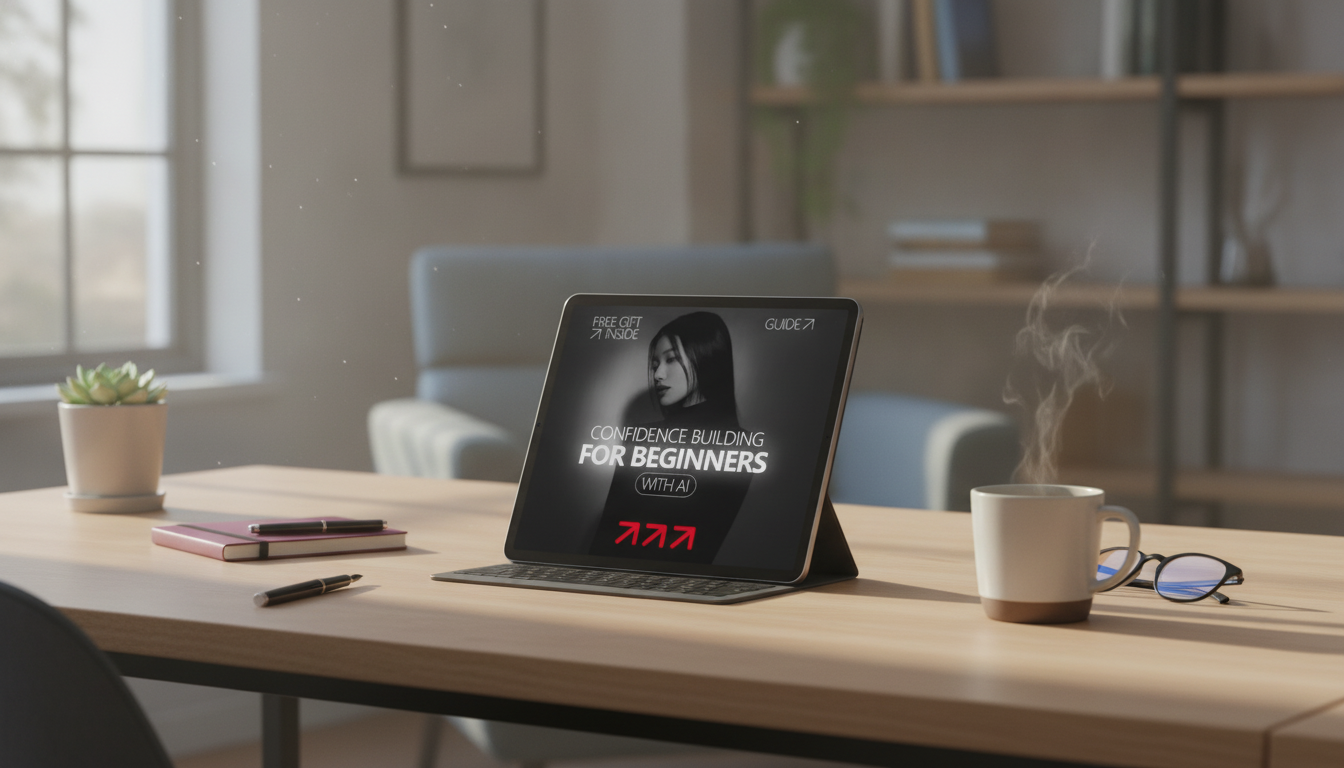
Confidence Building for Beginners with AI: A Complete Guide to Harnessing Technology for Personal Growth
Confidence grows fastest with consistent practice, clear feedback, and small wins. AI tools can provide structure, reflection, and low-pressure rehearsal—especially helpful when starting from scratch. The goal isn’t to “be fearless.” It’s to build enough self-trust to start, stay present, and recover quickly when things feel awkward or uncertain.
What Confidence Looks Like When Starting Out
Early confidence often looks quiet and practical: showing up, taking one small risk, and noticing that nothing “catastrophic” happened. It helps to separate confidence from personality—confidence is a skill built through evidence and repetition, not an inborn trait reserved for outgoing people.
- Common beginner barriers: fear of judgment, unclear goals, and harsh self-talk that turns every stumble into a “proof” story.
- A useful reframe: confidence follows action more often than it precedes it. Waiting to feel ready can keep progress stuck.
- Pick one confidence domain first: social (small talk), work (speaking up), learning (new skill), or health (consistent habits).
How AI Supports Confidence Without Replacing Real Life
AI can be a training partner, not a substitute for living. The big advantage is a private space to practice and refine your approach before you take it into the real world.
Set a Simple Baseline and a 14-Day Confidence Plan
A practical rule: track evidence, not vibes. Each day, record what you did and what you learned. If you want a ready-to-follow structure, Confidence Building for Beginners with AI: A Complete Guide to Harnessing Technology for Personal Growth can keep the plan simple and repeatable.
14-Day Beginner Plan: Daily Actions and AI Support
| Day | Real-World Action (10–20 min) | How AI Helps | What to Record |
|---|---|---|---|
| 1 | Define a single goal and one fear that blocks it | Turn goal into 3 micro-steps and a success checklist | Baseline ratings + 1 sentence about the fear |
| 2 | Do the smallest version of the task | Create a script, checklist, or practice run | What was easier than expected |
| 3 | Repeat the task with a tiny upgrade | Suggest one improvement and one supportive reframe | One win + one next step |
| 4 | Ask one low-stakes question (online or in person) | Draft question options and polite follow-ups | How it felt before vs after |
| 5 | Practice saying “no” or setting a boundary once | Role-play responses and tone variations | Exact boundary sentence used |
| 6 | Share a small opinion or idea | Help structure a 3-sentence point | Outcome + what was learned |
| 7 | Weekly review and reset | Summarize patterns and propose week-2 focus | Top 3 actions completed |
| 8 | Do the task in a slightly harder context | Simulate objections or challenges | What triggered anxiety |
| 9 | Request feedback from one person | Draft a short feedback request | One piece of useful feedback |
| 10 | Practice a short introduction or pitch | Refine wording, brevity, and confidence cues | Best version of the intro |
| 11 | Handle one small mistake without spiraling | Create a “repair script” and coping plan | How long recovery took |
| 12 | Take a visible step (post, apply, submit, volunteer) | Proofread, improve clarity, reduce over-apologizing | What was submitted + relief level |
| 13 | Do a mini-challenge timed sprint | Set a timer plan and accountability message | What got done in the sprint |
| 14 | Review results and choose the next 14-day target | Generate a progression ladder for the next cycle | Before/after ratings + evidence list |
Use AI to Strengthen Self-Talk and Reduce Overthinking
Keep statements realistic. Over-the-top affirmations often backfire; believable language tends to stick. For more on resilience skills that support steady confidence, see the American Psychological Association’s guidance on resilience.
Practice Conversations and Social Confidence with Low-Pressure Role-Play
Build Competence Confidence: Learning, Work, and Skill Growth
Small environment upgrades can also support follow-through by reducing friction. A tidy “practice station” can be as simple as placing your essentials on a dedicated surface like the Luxury 12-Inch Stainless Steel Decorative Tray for Home, Kitchen & Countertop, or using a time anchor you like seeing every day, such as the Luxury Men’s Automatic Mechanical Watch.
Safety, Privacy, and Healthy Boundaries When Using AI
- Protect privacy: avoid sensitive identifiers and private third-party details.
- Treat outputs as suggestions: verify important claims and use your judgment.
- Know when to get support: if confidence struggles connect to severe anxiety, panic, trauma, or depression, seek qualified help. The National Institute of Mental Health overview of anxiety disorders is a helpful starting point for understanding symptoms and options.
- Prevent dependence: use AI for planning and rehearsal; rely on real people for belonging and deeper connection.
When your work is centered on thought patterns, structured approaches like CBT can be useful; the NHS CBT overview explains the basics.
A Guided Resource to Keep Momentum
A structured guide reduces decision fatigue: fewer choices, more action. Look for beginner-friendly steps, realistic expectations, and exercises that turn reading into reps. Used as a repeatable two-week system, Confidence Building for Beginners with AI: A Complete Guide to Harnessing Technology for Personal Growth fits well with a “practice, review, progress” loop that keeps confidence grounded in evidence.
FAQ
Can AI really help build confidence if it’s just a tool?
Yes—confidence grows from repeated action plus feedback. AI speeds up practice and reflection, but lasting confidence comes from taking those rehearsed steps into real situations.
What if using AI makes confidence feel “fake”?
Keep it authentic by using AI to rehearse and clarify, not to perform a personality. Focus on believable self-talk and skill-building so your confidence is supported by real follow-through.
How often should beginners practice confidence exercises?
Ten to twenty minutes daily is enough for most beginners, plus a weekly review to adjust the plan. Consistency matters more than intensity, especially when building comfort with small exposures.
Recommended for you


Build Real Confidence: 10-Min Coaching Exercises
Jun 30, 2026













Leave a comment