-
Shop
- Adidas
- Advanced Technologies
- AI Career Advantage Collection
- AI Skills for Creators & Freelancers
- AI Client Management
- AI Ethics
- AI Mindset
- AI Tools & Prompts
- AI Writing & Content Creation
- Audio, Voice & Music
- Design & Visual Creation
- Email, Messaging & Communication
- Freelancing & Business
- Marketing, Ads & Conversion
- Productivity, Workflow & Automation
- SEO & Search Optimization
- Social Media Content & Growth
- Strategy, Planning & Analytics
- Video Creation & Editing
- AI Skills Mastery 2026 Collection
- Bathroom
- Best-Sellers
- Car Accessories
- Confidence
- Dating & Social Skills
- Digital Resources
- AI & Technology
- AI Skills
- Beauty
- Budgeting & Saving
- Car Buying & Ownership
- Cozy Feast Collection
- Electronics & Technology
- Entrepreneurship & Business Growth
- Financial Education
- Financial Independence
- Financial Mindset & Psychology
- Goal Setting
- Hobbies
- Home Styling & Organization
- Kitchen & Recipes
- Leadership
- Mindfulness
- Mindset
- Online Business
- Parenting & Child Development
- Personal Style & Fashion
- Pet Lifestyle & Wellness
- Positive Thinking
- Sleep Improvement
- Smart Life with AI
- Stress Management & Relaxation
- Travel Planning
- Wellness
- Yoga & Fitness
- Yoga & Mind-Body Practices
- Education & Learning
- Family & Parenting
- Fashion
- Furniture
- Gadgets
- Health & Beauty
- Health & Wellness
- Home & Garden
- Home Decor
- Home Electronics
- Kids & Babies
- Kitchen
- Kitchen Best-Sellers
- Lighting
- Luxury Brands Collection
- Nike
- Patio, Lawn & Garden
- Personal Growth
- Pet Care
- Pet Supplies
- Pets
- Smart Amazon Shopping
- Sport & Outdoors
- Stress Relief & Relaxation
- Travel
- Travel & Adventure
- Wealth
- Popular
- Best deals
Printable Toddler Vocabulary Checklist for Daily Routines
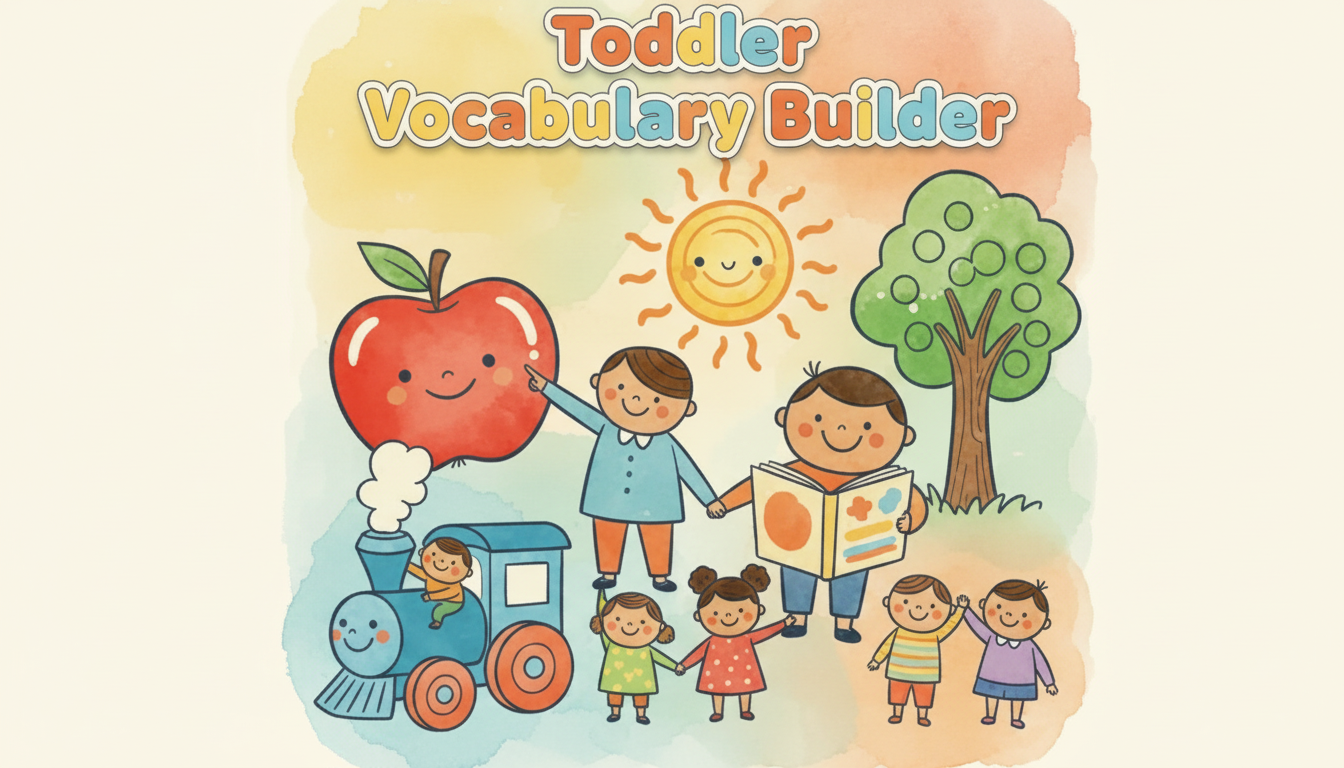
Toddler Vocabulary Builder Checklist: A Printable Guide to Growing Early Language Skills
A simple, repeatable routine can make a big difference in how many words toddlers understand and use. This checklist-style guide focuses on natural, everyday moments—mealtime, play, books, and routines—so parents and caregivers can support speech and vocabulary growth without turning life into a lesson.
What “Vocabulary” Looks Like in Toddlers
Toddler vocabulary is bigger than “clear words.” Many early communication skills count as meaningful steps toward speech.
- Receptive vocabulary (words understood) typically grows faster than expressive vocabulary (words spoken).
- Vocabulary building includes gestures, animal sounds, word approximations, and two-word combinations—not only “perfect” pronunciation.
- Growth often happens in bursts; a quiet week can be followed by sudden new words.
- Bilingual and multilingual toddlers may split words across languages; total vocabulary across languages matters.
Start With Connection: The Fastest Path to More Words
The most effective “strategy” is a responsive back-and-forth. When toddlers feel understood, they try more.
- Follow the child’s lead: talk about what they are already looking at, touching, or doing.
- Get face-to-face when possible so toddlers can see mouth movements and facial expressions.
- Use warm, responsive turns—pause after a comment or label so the child has time to respond (with a look, sound, gesture, or word).
- Keep language slightly above the child’s current level: one more word, one more idea.
For developmental reference points, the American Speech-Language-Hearing Association (ASHA) milestones and the CDC developmental milestones can be helpful guides.
The 5 Daily Moments That Build Vocabulary Naturally
Daily routines offer the best repetition without extra “practice time.” Aim for short, frequent language moments.
- Meals and snacks: label foods, describe textures, and offer choices (“banana or yogurt?”).
- Diapering, potty, bath: repeat body words and action words (“wash,” “splash,” “dry”).
- Getting dressed: name clothing items, colors, and simple concepts (“on/off,” “in/out”).
- Outdoor walks: point out vehicles, animals, weather, and neighborhood sights.
- Transitions: short, predictable phrases help toddlers map words to routines (“shoes on,” “time to go,” “all done”).
Everyday Moments → High-Value Words
| Daily moment | Words to model | Easy phrases to repeat |
|---|---|---|
| Snack time | more, all done, apple, cracker, drink | “More crackers?” “All done!” |
| Bath | wash, splash, bubbles, wet/dry, towel | “Wash toes.” “Big bubbles!” |
| Getting dressed | shirt, socks, on/off, up/down | “Socks on.” “Arms up!” |
| Play with cars | go/stop, fast/slow, up/down, in/out | “Car go!” “In the box.” |
| Book time | turn, look, big/little, animal names | “Turn page.” “Look—big dog.” |
Checklist Method: Model, Pause, Expand, Repeat
This four-step pattern keeps language simple, encouraging, and easy to repeat across the day.
- Model: say the word clearly in a short phrase (“blue ball”).
- Pause: wait 3–5 seconds; expect a response (sound, look, gesture, or word).
- Expand: if the toddler says “ball,” respond with one step up (“big ball,” “throw ball”).
- Repeat: use the same helpful phrases many times across the day to strengthen learning.
- Aim for many short repetitions rather than one long practice session.
Words That Give the Biggest Payoff (What to Focus on First)
If choosing words feels overwhelming, start with “power words” that fit almost any activity.
- Core words used everywhere: more, help, open, mine, go, stop, up, down, in, out, yes, no, all done.
- People and social words: mama/dada, names, hi/bye, please, thank you, sorry (modeled naturally).
- Action words: eat, drink, wash, throw, jump, read, sleep—verbs unlock simple sentences.
- Describing words: hot/cold, big/little, loud/quiet—builds flexibility and understanding.
- Early concept pairs: on/off, near/far, empty/full—use during play and routines.
Play-Based Activities That Spark New Vocabulary
Play makes words “stick” because toddlers hear language tied to movement, feelings, and cause-and-effect.
Books Without Pressure: Simple Shared Reading That Works
For more general parent guidance on language development, AAP’s HealthyChildren.org is a trusted source.
Printable Checklist: How to Use It Week to Week
When to Get Extra Support
Printable Resource: Toddler Vocabulary Builder Checklist
If it helps to have a simple plan you can stick on the fridge, Toddler Vocabulary Builder Checklist (printable) is designed for quick daily use with routines, play, and book time prompts. It organizes target words by category and keeps everyone consistent—parents, grandparents, babysitters, and childcare providers.
- Luxury 12-Inch Stainless Steel Decorative Tray for Home, Kitchen & Countertop to create a small “routine station” for books, toys, or flash-free prompts you rotate weekly.
- Strawberry Ceramic Seasoning Jar Set for a playful way to keep small snack toppers or “smell and taste” items that inspire describing words (sweet, salty, yummy, more).
- Adidas Men’s Green Suede Sneakers for caregivers who do lots of neighborhood walks—those outdoor moments are prime time for naming, pointing, and short phrases.
FAQ
How many words should a toddler say at age 2?
Many 2-year-olds use a growing set of words and start combining two words (like “more milk” or “mommy up”), but the range is wide. Understanding words and trying to communicate with gestures or sounds matters too. If progress feels stalled or comprehension is also limited, a professional check-in can be helpful.
What are the best activities to help a late talker build vocabulary?
Responsive daily routines and play-based modeling tend to work best: offer choices at snack (“banana or yogurt?”), use short phrases, repeat them often, and expand any attempt (“juice” → “more juice”). Pretend play scripts (cook, feed, wash, fix) and movement songs also build understanding through repetition.
Should caregivers correct toddler pronunciation?
Usually, it’s more effective to model the correct word naturally instead of directly correcting. If a toddler says “wawa,” respond with a friendly recast like “Water—more water?” Keeping the interaction positive helps toddlers keep trying.
Recommended for you


Budget HiFi Wired Earphones with Mic: Sound & Calls
Jul 19, 2026
Best Infrared Sauna Brand: How to Choose for Home
Jul 19, 2026













Leave a comment