-
Shop
- Adidas
- Advanced Technologies
- AI Career Advantage Collection
- AI Skills for Creators & Freelancers
- AI Client Management
- AI Ethics
- AI Mindset
- AI Tools & Prompts
- AI Writing & Content Creation
- Audio, Voice & Music
- Design & Visual Creation
- Email, Messaging & Communication
- Freelancing & Business
- Marketing, Ads & Conversion
- Productivity, Workflow & Automation
- SEO & Search Optimization
- Social Media Content & Growth
- Strategy, Planning & Analytics
- Video Creation & Editing
- AI Skills Mastery 2026 Collection
- Bathroom
- Best-Sellers
- Car Accessories
- Confidence
- Dating & Social Skills
- Digital Resources
- AI & Technology
- AI Skills
- Beauty
- Budgeting & Saving
- Car Buying & Ownership
- Cozy Feast Collection
- Dating & Social Confidence
- Electronics & Technology
- Entrepreneurship & Business Growth
- Financial Education
- Financial Independence
- Financial Mindset & Psychology
- Goal Setting
- Hobbies
- Home Styling & Organization
- Kitchen & Cooking
- Kitchen & Recipes
- Leadership
- Mindfulness
- Mindset
- Online Business
- Parenting & Child Development
- Personal Style & Fashion
- Pet Lifestyle & Wellness
- Positive Thinking
- Sleep Improvement
- Smart Life with AI
- Stress Management & Relaxation
- Travel Planning
- Wellness
- Wellness & Self-Care
- Yoga & Fitness
- Yoga & Mind-Body Practices
- Education & Learning
- Family & Parenting
- Fashion
- Furniture
- Gadgets
- Health & Beauty
- Health & Wellness
- Home & Garden
- Home Decor
- Home Electronics
- Kids & Babies
- Kitchen
- Kitchen Best-Sellers
- Lighting
- Luxury Brands Collection
- Nike
- Online Business for Beginners
- Patio, Lawn & Garden
- Personal Growth
- Pet Care
- Pet Supplies
- Pets
- Smart Amazon Shopping
- Sport & Outdoors
- Stress Relief & Relaxation
- TikTok Growth & Monetization Mastery
- Travel
- Travel & Adventure
- Wealth
- Popular
- Best deals
Quiet Your Inner Critic: A 4-Step Compassion Plan
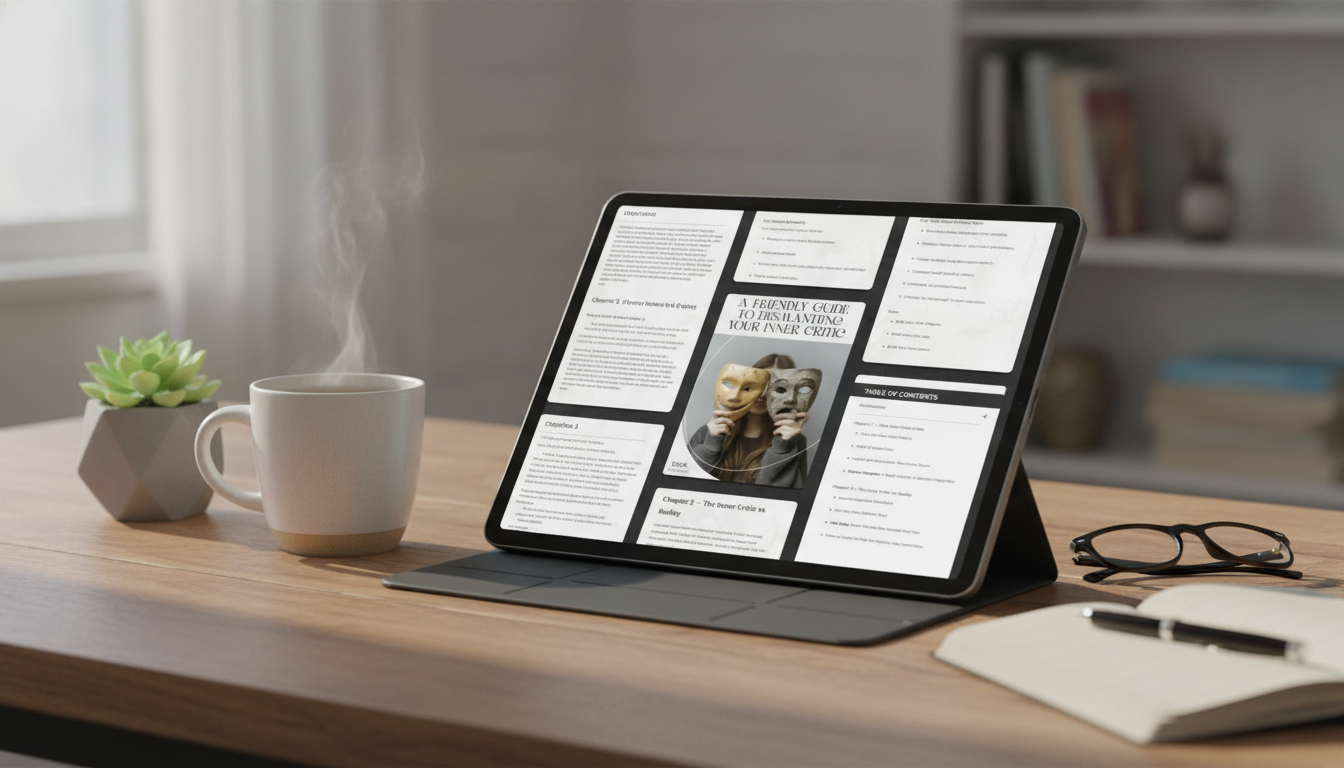
A Friendly Guide to Dismantling Your Inner Critic
An inner critic can sound convincing, especially under stress—turning small mistakes into sweeping judgments. A gentler, more effective approach is to recognize the pattern, understand what triggers it, and practice skills that replace harsh self-talk with clear, supportive guidance. This guide walks through practical steps to reduce self-criticism and build emotional resilience.
What the inner critic is (and why it shows up)
The “inner critic” is the part of the mind that tries to prevent pain by scanning for risk—embarrassment, rejection, failure, or loss of control—and then pushing hard to avoid it. It often shows up in familiar roles:
- The perfectionist: “If it isn’t flawless, it’s worthless.”
- The catastrophizer: “This tiny slip means everything will fall apart.”
- The mind reader: “They’re disappointed; they must think I’m incompetent.”
- The comparison judge: “Everyone else has it together—why don’t I?”
Many people develop these patterns as learned protection strategies. Early feedback loops (praise only for achievement, criticism without repair), social comparison, and fear of rejection can teach the brain that harshness equals safety. The catch is that self-criticism can feel “motivating” in the moment while quietly raising stress and avoidance. Chronic stress impacts the body and attention, which can make mistakes more likely and confidence harder to access (see the American Psychological Association’s overview of stress effects).
A key distinction helps: accountability and improvement can exist without shame. Shame says “I am bad.” Accountability says “Something didn’t work—here’s what to change next.”
Signs self-talk has turned into a problem
Self-talk becomes a problem when it consistently shrinks your choices—making you more anxious, less clear, and more likely to shut down or overcompensate.
- Language that signals shame: “always/never,” “what’s wrong with me,” “I don’t deserve,” “I’m a failure.”
- Emotional cues: sudden anxiety, tight chest, irritability, shutdown, rumination.
- Behavioral cues: procrastination, overworking, people-pleasing, avoiding feedback, difficulty resting.
- Common spike moments: after social media, conflict, deadlines, fatigue, or big transitions.
Self-talk check: helpful coach vs. harsh critic
| Moment | Harsh critic says | Helpful coach says | Next small step |
|---|---|---|---|
| Made a mistake | You’re incompetent. | You missed something; let’s fix it. | Identify what happened and correct one piece. |
| Got critical feedback | They think you’re terrible. | This is information, not a verdict. | Ask one clarifying question. |
| Fell behind | You never follow through. | You’re overwhelmed; reset the plan. | Choose one 10-minute task. |
| Comparing to others | You’re not good enough. | Different timelines; focus on your lane. | Name one value-based goal for today. |
Step 1: Notice the pattern without arguing with it
When the critic shows up, debating it can keep you trapped in the same loop. Instead, build a little distance first.
- Use a quick label: “critic voice,” “story,” or “alarm system.” A label turns the message into a mental event, not a command.
- Track the loop: trigger → thought → emotion → behavior (one sentence each). Example: “Deadline moved up” → “I can’t handle this” → “panic” → “scrolling and avoiding email.”
- Name the theme: worth, competence, belonging, safety, or control. Themes repeat—and recognizing them reduces surprise.
- Reduce intensity first: one slow exhale, feet on the floor, a brief walk. Clearer thinking comes after your body settles.
If stress has been running high, simple coping basics matter. The National Institute of Mental Health highlights practical ways to care for your mental health during stressful periods.
Step 2: Translate harsh messages into needs and values
Behind most inner attacks is a need trying to get met—just expressed in a painful way. Translation turns criticism into usable information.
- Look for the need: safety, competence, rest, clarity, support, connection.
- Turn labels into observations + needs: “You’re lazy” becomes “Energy is low; I need rest and structure.”
- Swap global judgments for specifics: “I’m a mess” becomes “I missed two deadlines this week.” Specifics can be planned around.
- Find the value under the fear: growth, integrity, reliability, kindness. The critic often cares—clumsily—about what matters most.
This is where self-compassion helps without lowering standards. Self-compassion is not “letting yourself off the hook”; it’s relating to yourself with the same steadiness you’d offer someone you love (see the Center for Mindful Self-Compassion).
Step 3: Replace self-attack with compassionate accountability
Compassionate accountability keeps the honesty of feedback while removing the poison of shame. A simple structure makes it easier to practice when you’re activated:
Step 4: Build a plan for repeat triggers
A gentle tool for daily practice: the digital eBook
Recommended: A Friendly Guide to Dismantling Your Inner Critic (digital eBook)
- Luxury 12-Inch Stainless Steel Decorative Tray for Home, Kitchen & Countertop (use it as a simple “reset station” for a journal, tea, or notes)
- Wabi-Sabi Style Vintage Hourglass Side Table (a dedicated corner can reduce decision fatigue and encourage consistency)
- Luxury Men’s Automatic Mechanical Watch (a tangible reminder for timeboxing and taking breaks)
FAQ
How long does it take to quiet an inner critic?
Many people notice the intensity soften within a few weeks of consistent practice, especially when they track triggers and use a repeatable script. Deeper habits can take longer, so progress is best measured by quicker recovery and fewer spirals—not never having the thought.
Is self-criticism ever helpful for motivation?
Constructive feedback can help, but shame-based self-talk often increases stress and avoidance. Motivation tends to be more sustainable when it’s paired with compassionate accountability and a clear next step.
What if positive affirmations feel fake?
Use believable, evidence-based statements like “I’m learning” or “One step at a time,” and focus on actions over mood. Neutral reframes and small behaviors build credibility faster than forcing yourself to “feel positive.”















Leave a comment