-
Shop
- Adidas
- Advanced Technologies
- AI Career Advantage Collection
- AI Skills for Creators & Freelancers
- AI Client Management
- AI Ethics
- AI Mindset
- AI Tools & Prompts
- AI Writing & Content Creation
- Audio, Voice & Music
- Design & Visual Creation
- Email, Messaging & Communication
- Freelancing & Business
- Marketing, Ads & Conversion
- Productivity, Workflow & Automation
- SEO & Search Optimization
- Social Media Content & Growth
- Strategy, Planning & Analytics
- Video Creation & Editing
- AI Skills Mastery 2026 Collection
- Bathroom
- Best-Sellers
- Car Accessories
- Confidence
- Dating & Social Skills
- Digital Resources
- AI & Technology
- AI Skills
- Beauty
- Budgeting & Saving
- Car Buying & Ownership
- Cozy Feast Collection
- Electronics & Technology
- Entrepreneurship & Business Growth
- Financial Education
- Financial Independence
- Financial Mindset & Psychology
- Goal Setting
- Hobbies
- Home Styling & Organization
- Kitchen & Recipes
- Leadership
- Mindfulness
- Mindset
- Online Business
- Parenting & Child Development
- Personal Style & Fashion
- Pet Lifestyle & Wellness
- Positive Thinking
- Sleep Improvement
- Smart Life with AI
- Stress Management & Relaxation
- Travel Planning
- Wellness
- Yoga & Fitness
- Yoga & Mind-Body Practices
- Education & Learning
- Family & Parenting
- Fashion
- Furniture
- Gadgets
- Health & Beauty
- Health & Wellness
- Home & Garden
- Home Decor
- Home Electronics
- Kids & Babies
- Kitchen
- Kitchen Best-Sellers
- Lighting
- Luxury Brands Collection
- Nike
- Online Business for Beginners
- Patio, Lawn & Garden
- Personal Growth
- Pet Care
- Pet Supplies
- Pets
- Smart Amazon Shopping
- Sport & Outdoors
- Stress Relief & Relaxation
- TikTok Growth & Monetization Mastery
- Travel
- Travel & Adventure
- Wealth
- Popular
- Best deals
Weekly Cat Training Routine: Calm, Trust & Easy Tricks
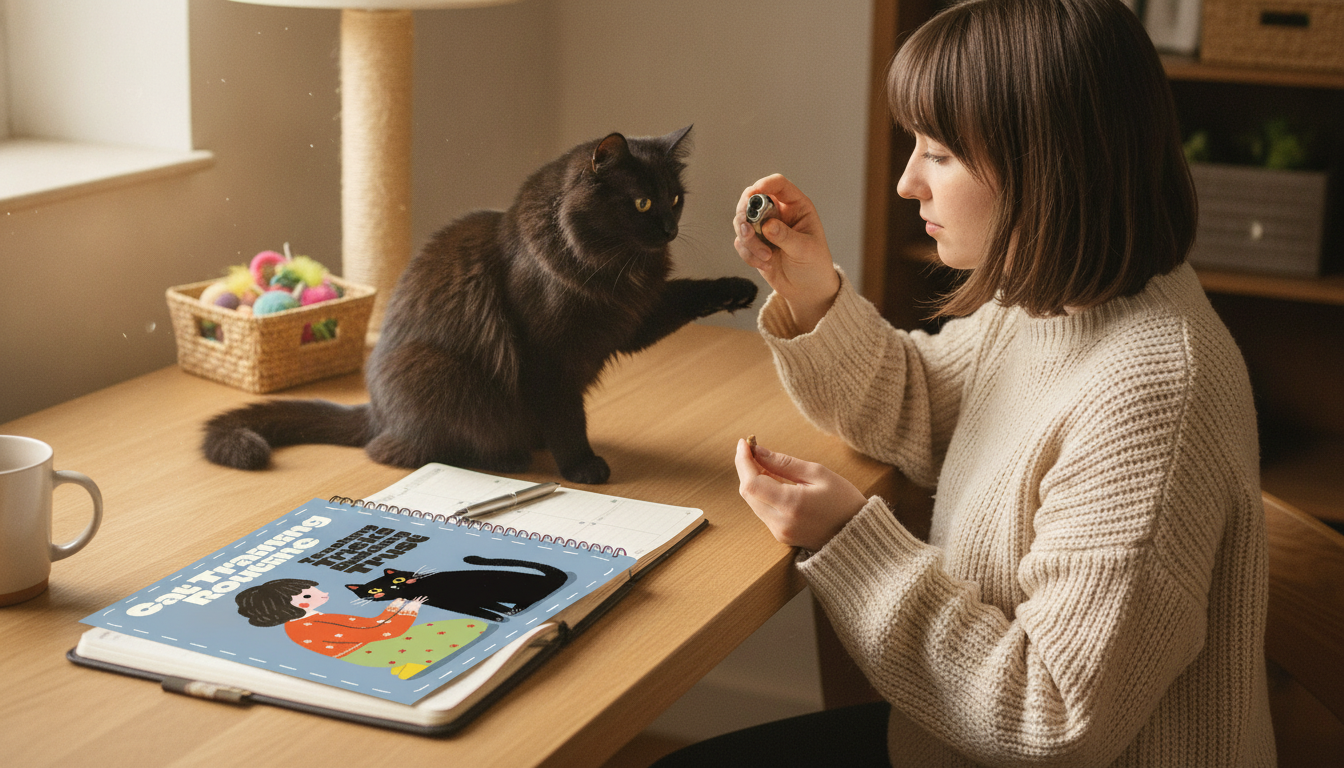
A Weekly Cat Training Routine That Builds Trust, Teaches Tricks, and Keeps Days Calm
A steady weekly rhythm helps cats feel safe and makes training easier: short sessions, predictable cues, and consistent rewards. A routine-focused checklist approach keeps progress visible without turning training into a chore, whether the goal is confidence-building, simple tricks, calmer mealtimes, or better behavior around handling and carriers. For more guidance, see Pet Adjustment Periods: The 3 Days – 3 Weeks – 3 Months Guide.
What a “calm routine” looks like for most cats
Calm training isn’t about doing more—it’s about doing the same small, successful things often enough that your cat can predict what happens next. For further reading, see [PDF] TRAINING MANUAL – Freedom Service Dogs.
- Predictable daily anchors: meals, play, rest, and a brief training window at similar times.
- Short sessions (1–5 minutes): repeated micro-sessions typically beat long sessions that lead to frustration.
- A clear end signal: a treat scatter, a release word (“all done”), or a calm pet helps prevent demand behaviors.
- Low-distraction setup: use the same mat/spot, same reward type, and the same cue wording.
- Progress = comfort + consistency: especially for shy, senior, or newly adopted cats, calm repetition matters more than speed.
Getting set up: rewards, markers, and a training spot
Before you teach anything, set up a system your cat can understand in seconds: a marker, a reward, and a “place” where training happens.
- Choose 2–3 high-value rewards: small soft treats, a lickable treat, or a favorite toy for play-motivated cats.
- Use a marker: a clicker or a short word (“yes”) that lands at the exact moment your cat does the right thing.
- Pick a consistent station: a non-slip mat or small rug becomes a clear context cue.
- Start easier than you think: reward looking at the mat, stepping on it, and staying for 1–2 seconds.
- Follow the success rule: end while your cat is still engaged; save the harder step for tomorrow.
If you want a simple way to keep sessions consistent from day to day, the Weekly Cat Training Routine Checklist (printable digital download) can help you track tiny steps without overthinking it.
Weekly structure: rotate goals without overwhelming your cat
A helpful pattern is to rotate three “training lanes” across the week so your cat learns skills that support real life: comfort with handling, one simple trick, and one calm-life skill.
- Three lanes: trust/handling, a simple trick, and a calm-life skill (settle, carrier, nail file presence).
- One maintenance day: repeat easy wins to keep momentum.
- One rest day: no formal training—just enrichment and predictable routines.
- Log only essentials: cue, difficulty step, successful reps, and best reward.
- When avoidance happens: scale back—reduce distractions, shorten the session, or raise reward value.
Sample Weekly Routine (10–15 minutes total per day)
| Day | Session 1 (1–3 min) | Session 2 (1–3 min) | Calm Routine Anchor |
|---|---|---|---|
| Mon | Mat/Stationing | Name response + eye contact | Play → meal → quiet time |
| Tue | Handling: chin touch / brief hold | Sit (lure) or paws-on-target | Treat scatter after training |
| Wed | Carrier approach + treats inside | High-five (target) or spin | Same nap spot + low noise |
| Thu | Brush/comb desensitization | Come when called (short distance) | Window perch or puzzle feeder |
| Fri | Settle on mat (1–5 seconds) | Trick review (easy reps) | Calm petting after meal |
| Sat | Harness/collar tolerance (tiny steps) | New trick step (one increment) | Short interactive play session |
| Sun | No formal training | No formal training | Enrichment only + routine meals |
Trust-building sessions: handling without stress
Handling skills are easiest when they’re taught as “opt-in” games. That reduces defensive swats and helps your cat recover faster from surprises.
- Start with consent checks: reward when your cat approaches; pause when your cat turns away.
- Split handling into tiny steps: touch → brief pressure → lift → longer duration, rewarding each step.
- Pair tools with good things: show brush, reward; brush once, reward; stop before irritation builds.
- Offer easy exits: let your cat leave the mat at any time; choice often increases willingness.
- For fearful cats: focus on relaxed proximity first (comfortable within 3–6 feet) before any touch.
For more on stress reduction and feline-friendly handling, see the American Association of Feline Practitioners (AAFP) Feline Behavior Guidelines.
Teaching tricks that support real-life calm behavior
The most useful “tricks” double as gentle redirection tools. They give you a way to guide behavior without grabbing, chasing, or repeating cues.
Creating a calmer home routine: prevent common friction points
If you like keeping treats and tools in one predictable place, a dedicated “training station” can help. A simple countertop organizer such as the Luxury 12-Inch Stainless Steel Decorative Tray can hold clickers, lickable treats, and a small towel so sessions start quickly and end cleanly.
Using a weekly checklist to stay consistent (without overtracking)
If you want a ready-to-use layout designed for quick check-ins (not overtracking), the Weekly Cat Training Routine Checklist is an easy way to keep the week steady while you rotate goals.
Troubleshooting: when progress stalls
FAQ
How long should a cat training session be?
Most cats do best with 1–5 minute sessions, 1–3 times per day. End early while engagement is high, and keep sessions even shorter for anxious cats, seniors, or easily overstimulated kittens.
What if my cat refuses treats during training?
Try training before a regular meal, switching to higher-value rewards (like lickable treats), and lowering distractions. If treat refusal is sudden or paired with hiding, lethargy, or behavior changes, pause training and consider a vet check.
How many days a week should training happen?
Training on most days works well, with one true rest day to prevent burnout. Rotate goals across the week (trust, trick, calm-life skill) and include at least one maintenance day for easy wins.
















Leave a comment