-
Shop
- Adidas
- Advanced Technologies
- AI Career Advantage Collection
- AI Skills for Creators & Freelancers
- AI Client Management
- AI Ethics
- AI Mindset
- AI Tools & Prompts
- AI Writing & Content Creation
- Audio, Voice & Music
- Design & Visual Creation
- Email, Messaging & Communication
- Freelancing & Business
- Marketing, Ads & Conversion
- Productivity, Workflow & Automation
- SEO & Search Optimization
- Social Media Content & Growth
- Strategy, Planning & Analytics
- Video Creation & Editing
- AI Skills Mastery 2026 Collection
- Bathroom
- Best-Sellers
- Car Accessories
- Confidence
- Dating & Social Skills
- Digital Resources
- AI & Technology
- AI Skills
- Beauty
- Budgeting & Saving
- Car Buying & Ownership
- Cozy Feast Collection
- Electronics & Technology
- Entrepreneurship & Business Growth
- Financial Education
- Financial Independence
- Financial Mindset & Psychology
- Goal Setting
- Hobbies
- Home Styling & Organization
- Kitchen & Recipes
- Leadership
- Mindfulness
- Mindset
- Online Business
- Parenting & Child Development
- Personal Style & Fashion
- Pet Lifestyle & Wellness
- Positive Thinking
- Sleep Improvement
- Smart Life with AI
- Stress Management & Relaxation
- Travel Planning
- Wellness
- Yoga & Fitness
- Yoga & Mind-Body Practices
- Education & Learning
- Family & Parenting
- Fashion
- Furniture
- Gadgets
- Health & Beauty
- Health & Wellness
- Home & Garden
- Home Decor
- Home Electronics
- Kids & Babies
- Kitchen
- Kitchen Best-Sellers
- Lighting
- Luxury Brands Collection
- Nike
- Online Business for Beginners
- Patio, Lawn & Garden
- Personal Growth
- Pet Care
- Pet Supplies
- Pets
- Smart Amazon Shopping
- Sport & Outdoors
- Stress Relief & Relaxation
- TikTok Growth & Monetization Mastery
- Travel
- Travel & Adventure
- Wealth
- Popular
- Best deals
Low-Stress Dinner Routine Toolkit: Plans, Guides & Checklists
A calmer dinner routine starts with a repeatable system
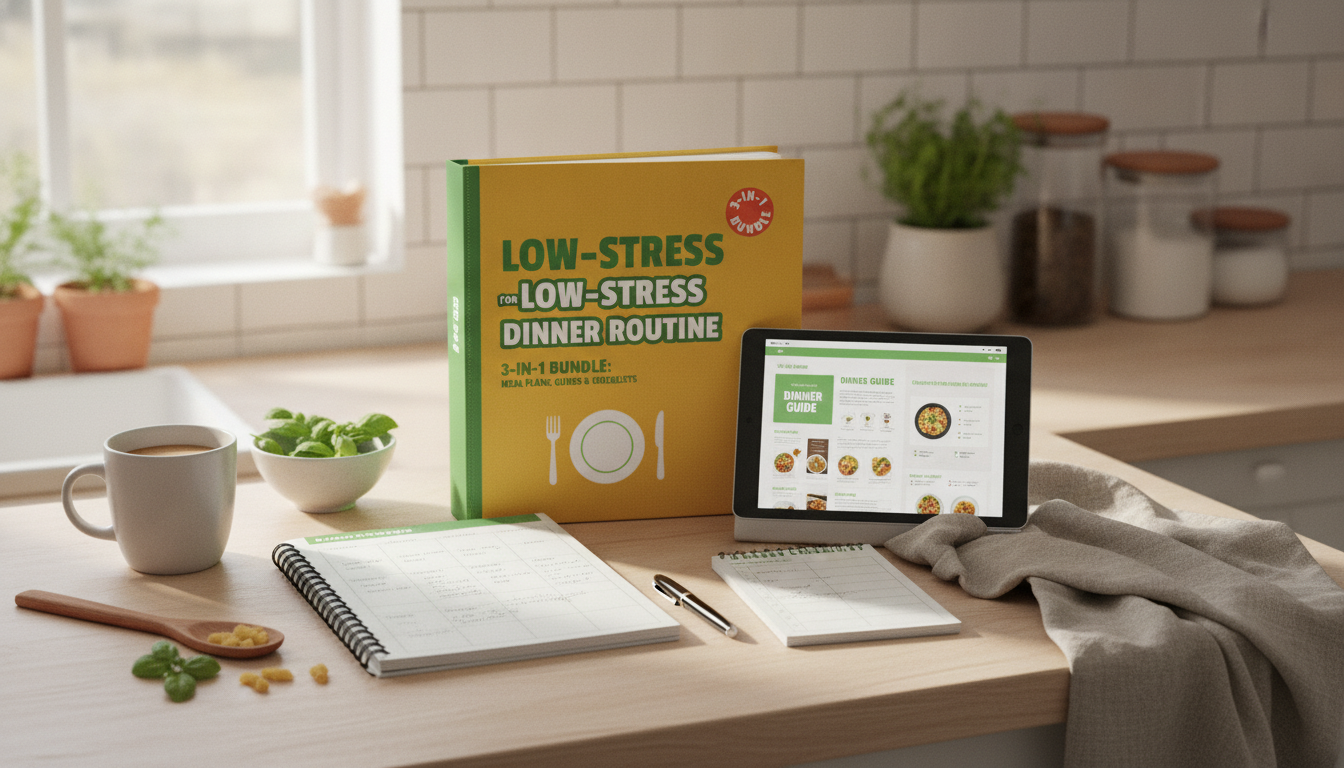
A low-stress dinner routine rarely comes from “more willpower.” It usually comes from a system you can run on autopilot: decide what to cook, shop with fewer surprises, prep with less backtracking, and finish the night with a quick reset. A 3-in-1 bundle that combines meal plans, quick-reference guides, and checklists is designed to organize those steps so dinner feels more predictable—without feeling boring.
If you want a single place to keep your weekly plan, your grocery-list logic, and your nightly flow, the The Useful Toolkit for Low-Stress Dinner Routine: 3-in-1 Bundle of Meal Plans, Guides & Checklists is built to be reused week after week.
What makes dinner feel stressful (and what fixes it)
Weeknight stress tends to come from a few predictable friction points:
- Last-minute decisions (and the mental load of choosing again).
- Missing ingredients that force substitutions on the fly—or another store run.
- Unclear priorities (what must be cooked first, what can wait, what can be simplified).
- Too many moving parts at once, which leads to scattered prep and more dishes.
A calmer routine relies on repeatable steps: plan → shop → prep → cook → reset. Tools that reduce stress most are a short weekly planning session, a consistent grocery list format, and a simple nightly flow that keeps you from reinventing dinner every day.
What’s inside the 3-in-1 bundle
This toolkit is organized around three reusable components that work together:
- Meal plans: Structured weekly options designed to reduce planning time and keep dinners predictable without feeling repetitive.
- Guides: Fast decision support for common situations (busy nights, low-energy nights, leftover nights) plus simple frameworks for balanced plates.
- Checklists: Planning, shopping, prep, and clean-up lists that turn dinner into a routine rather than a daily puzzle.
How each component supports a smoother dinner routine
| Bundle piece | Best used for | Typical time saved | Most helpful when |
|---|---|---|---|
| Meal plans | Choosing dinners for the week | 30–60 minutes/week | Decision fatigue hits or schedules change |
| Guides | Making quick swaps and keeping meals balanced | 10–20 minutes/day | Ingredients run short or energy is low |
| Checklists | Turning steps into a repeatable process | 5–15 minutes/day | Weeknights feel chaotic or rushed |
A simple weekly rhythm that keeps dinners on track
The easiest routines don’t add more tasks—they cluster them so you do less “starting over.” A practical weekly rhythm looks like this:
- Pick a planning day: Set aside 15–20 minutes once a week to select meals and confirm the week’s busiest nights.
- Choose “anchors”: Assign 1–2 ultra-reliable dinners (sheet pan, pasta, stir-fry) and rotate the rest for variety.
- Shop once with a single master list: Group ingredients by store section to avoid multiple small trips and missed items.
- Add a prep checkpoint: One short prep session (wash/chop/marinade) makes weeknights dramatically faster.
For balanced plates without overcomplicating nutrition, it helps to use a simple visual framework like USDA MyPlate or the Healthy Eating Plate from Harvard’s Nutrition Source.
How to use the toolkit in 15 minutes (first-time setup)
The first setup is meant to be quick—just enough structure to remove the biggest bottlenecks.
- Step 1: Identify weeknight constraints (work late, kids’ activities, gym nights) and mark 2–3 “low-effort” evenings.
- Step 2: Select a matching meal plan week and swap in any favorites that fit dietary needs.
- Step 3: Build the grocery list from the checklist format; highlight pantry items to confirm what’s already on hand.
- Step 4: Choose one prep task that removes the biggest bottleneck (chop vegetables, cook a grain, portion protein).
If your kitchen tends to feel scattered at go-time, a simple “launch point” can help—like using a countertop tray to hold tonight’s recipe page, seasonings, and a timer. The Luxury 12-Inch Stainless Steel Decorative Tray for Home, Kitchen & Countertop can work as a tidy staging spot so tools don’t migrate across the kitchen while you cook.
Nightly flow: a low-stress dinner routine that repeats
Consistency matters more than perfection. A simple nightly flow reduces backtracking and helps dinner “move forward” even when you’re tired.
- A consistent start: Set a 5-minute timer for quick prep and pull ingredients/tools before turning on heat.
- One-pot or one-pan priority: Use sheet pans, skillets, and pot meals on the busiest nights to reduce dishes.
- Use the checklist to avoid backtracking: Prep order matters (wash → chop → cook → plate → pack leftovers).
- A short reset: 5–10 minutes of cleanup and tomorrow’s glance keeps the routine from piling up.
Making meal plans feel flexible (not rigid)
Who this bundle helps most
How to get better results in the first two weeks
What to look for in a dinner-planning toolkit
For an all-in-one approach that keeps planning, decision support, and routine steps together, use the 3-in-1 Bundle of Meal Plans, Guides & Checklists as your weekly “home base,” then let the checklists carry the routine on nights when your energy is low.
FAQ
How quickly does a dinner routine feel easier after starting a plan-and-checklist system?
Most people notice relief in the first week because there are fewer daily decisions. Bigger time savings often show up by week two once the planning and shopping rhythm feels familiar.
Can the meal plans work for picky eaters or dietary preferences?
Yes—focus on flexible components and easy swaps (proteins, sauces, sides). Keep the cooking method the same while changing flavors and ingredients so the routine stays simple.
What if the week changes and the plan falls apart?
Cook the most perishable meals first, shift one dinner to leftovers or a pantry night, and use your checklist to rebuild the next week quickly. A plan that includes backup options is designed for real-life interruptions.
















Leave a comment