-
Shop
- Adidas
- Advanced Technologies
- AI Career Advantage Collection
- AI Skills for Creators & Freelancers
- AI Client Management
- AI Ethics
- AI Mindset
- AI Tools & Prompts
- AI Writing & Content Creation
- Audio, Voice & Music
- Design & Visual Creation
- Email, Messaging & Communication
- Freelancing & Business
- Marketing, Ads & Conversion
- Productivity, Workflow & Automation
- SEO & Search Optimization
- Social Media Content & Growth
- Strategy, Planning & Analytics
- Video Creation & Editing
- AI Skills Mastery 2026 Collection
- Bathroom
- Best-Sellers
- Car Accessories
- Confidence
- Dating & Social Skills
- Digital Resources
- AI & Technology
- AI Skills
- Beauty
- Budgeting & Saving
- Car Buying & Ownership
- Cozy Feast Collection
- Electronics & Technology
- Entrepreneurship & Business Growth
- Financial Education
- Financial Independence
- Financial Mindset & Psychology
- Goal Setting
- Hobbies
- Home Styling & Organization
- Kitchen & Recipes
- Leadership
- Mindfulness
- Mindset
- Online Business
- Parenting & Child Development
- Personal Style & Fashion
- Pet Lifestyle & Wellness
- Positive Thinking
- Sleep Improvement
- Smart Life with AI
- Stress Management & Relaxation
- Travel Planning
- Wellness
- Yoga & Fitness
- Yoga & Mind-Body Practices
- Education & Learning
- Family & Parenting
- Fashion
- Furniture
- Gadgets
- Health & Beauty
- Health & Wellness
- Home & Garden
- Home Decor
- Home Electronics
- Kids & Babies
- Kitchen
- Kitchen Best-Sellers
- Lighting
- Luxury Brands Collection
- Nike
- Online Business for Beginners
- Patio, Lawn & Garden
- Personal Growth
- Pet Care
- Pet Supplies
- Pets
- Smart Amazon Shopping
- Sport & Outdoors
- Stress Relief & Relaxation
- TikTok Growth & Monetization Mastery
- Travel
- Travel & Adventure
- Wealth
- Popular
- Best deals
Wooden Montessori Walker With Wheels: Safe First Steps
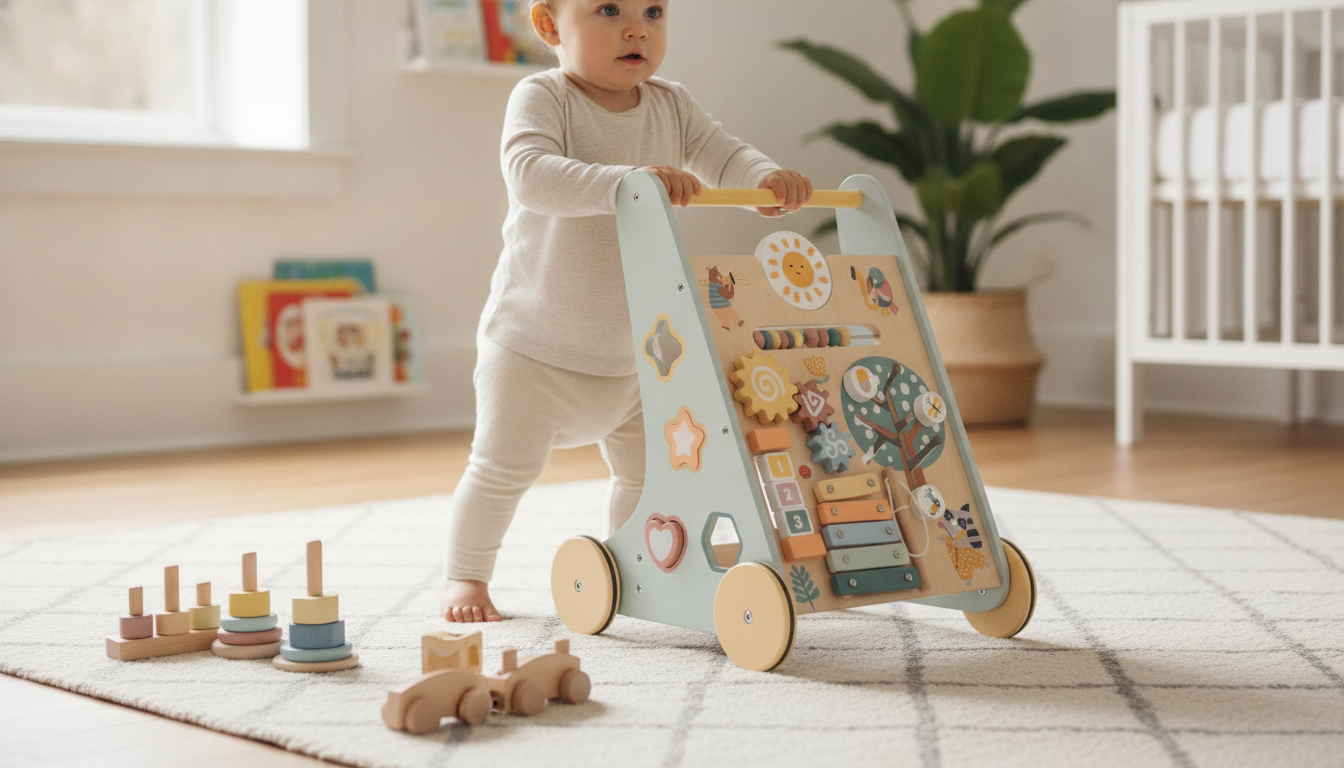
Wooden Montessori Baby Walker with Wheels: Steady Support for Early Steps
A wooden push walker can encourage balance, coordination, and independent movement when a baby is developmentally ready. A Montessori-style walker with wheels is especially appealing for families who want simple, skill-forward gear that blends into the play space without lights, sounds, or screens. Below are practical guidelines for choosing a sturdy wooden push walker, setting it up safely, and turning a few minutes of practice into purposeful, calm play.
What a Montessori-Style Push Walker Supports
In a Montessori-aligned home, movement is treated as a key “work” of infancy: the baby is building the body and the brain through repeated, self-initiated practice. A push walker supports this process when it’s used as an option—not a requirement—and when the baby is already close to walking.
- Promotes gross-motor development by encouraging upright posture, weight shifting, and controlled steps.
- Builds confidence through self-directed movement rather than being placed into a device.
- Encourages practical independence: reaching a shelf, transporting a toy, or moving between play areas.
- Works best as a “push walker” (baby propels it) rather than a sit-in walker (baby is carried by the device).
- Pairs well with a floor-level, uncluttered environment and footwear-free practice (grippy socks or bare feet on safe surfaces).
Because the child is doing the work—standing, steering, stopping, and turning—a push walker can complement cruising along furniture and supported steps while a caregiver stays close and keeps the route predictable.
Product Snapshot: Wooden Montessori Baby Walker with Wheels
If you’re looking for a straightforward wooden push walker, the Wooden Montessori Baby Walker with Wheels offers a simple, furniture-like presence in the play area. Wooden construction tends to feel steady under small hands, and wheels can make practice feel smoother as babies transition from cruising to early steps.
- Wood construction for a sturdy, furniture-like feel in the play space.
- Wheeled design intended for push support during cruising and early walking practice.
- A good fit for caregivers looking for a simple, screen-free, skill-forward baby gear option.
- Price point positioned as an accessible everyday essential rather than a premium heirloom piece.
- Best used under close supervision and in a prepared area free of stairs and hazards.
Quick Checklist for a Safe, Useful Push Walker
| What to Check | Why It Matters | How to Evaluate at Home |
|---|---|---|
| Stability and base width | Helps prevent tipping during turns | Gently push from the side; it should resist wobbling or lifting |
| Wheel speed / resistance | Too fast can outpace balance skills | Test on your flooring; look for controlled rolling rather than sudden darting |
| Handle height and grip | Supports neutral wrists and upright posture | Baby’s elbows should stay slightly bent, not locked, while holding the handle |
| Surface compatibility | Different floors change traction and speed | Try on rug and hard floor; choose the safer zone for practice |
| Safe edges and finish | Reduces risk of scrapes and mouth contact concerns | Run a hand along corners; avoid sharp edges and flaking finishes |
| Space and hazard control | Prevents collisions and falls | Use away from stairs; block thresholds; keep cords and small objects off the floor |
When to Introduce a Push Walker (Developmental Readiness)
The most reliable “go” signal isn’t a specific age—it’s what the baby can already do with control. A push walker is most useful when the baby is actively practicing standing and cruising, and is starting to transfer weight from one foot to the other.
Safe Setup at Home (Especially With Wheels)
For broader safety guidance, the American Academy of Pediatrics explains why mobility devices can increase injury risk near hazards (AAP: Baby Walkers—A Dangerous Choice), and the U.S. Consumer Product Safety Commission provides additional information on baby walker safety considerations (CPSC Baby Walker Safety).
Simple Montessori-Aligned Activities With a Push Walker
If you want a neat “drop zone” for small play items (scarves, board books, soft blocks) near the practice area, a simple organizer can help keep the floor clear. The Luxury 12-Inch Stainless Steel Decorative Tray for Home, Kitchen & Countertop can be used on a low shelf to corral a few items so the walking lane stays uncluttered.
Care, Durability, and What to Watch Over Time
A Note on Walker Safety and Common Confusion
For movement foundations beyond walker practice, pediatric physical therapy resources often emphasize floor play and tummy time as building blocks for strength and coordination (American Physical Therapy Association: Pediatrics).
Also Available for a Calm, Functional Play Space
For families organizing a prepared environment, a stable surface near the play area can be useful for rotating a few materials (while keeping the walking path clear). The Wabi-Sabi Style Vintage Hourglass Side Table can serve as a designated adult-controlled station for items you don’t want on the floor during walking practice.
FAQ
What age is appropriate for a wooden push walker with wheels?
Most babies are ready when they can pull to stand and cruise with control, often somewhere around 9–15 months. Readiness matters more than age, and short, supervised sessions are typically best.
Are wheeled baby walkers safe on hardwood floors?
They can roll much faster on hardwood, so test the speed first and start on a rug or non-slip mat when possible. Keep a clear path, block stairs, and stay within arm’s reach during use.
How is a push walker different from a sit-in baby walker?
A push walker is moved by the child while standing and stepping, while a sit-in walker carries the child in a seat inside a frame. Safety guidance strongly cautions against sit-in walkers due to injury risks and rapid access to hazards.
Recommended for you
Automatic Car Wash Guide: Touchless vs Soft-Touch
Jun 27, 2026











Leave a comment